
Press Release
Japan Electronics and Information Technology Industries Association
CEATEC AWARD 2026
Announcement of the recipients of The Minister of Internal Affairs and Communications Award,
The Minister of Economy, Trade and Industry Award, The Minister of Digital Affairs Award, the Mobility Innovation Award and other awards

The Japan Electronics and Information Technology Industries Association (JEITA)—whose Representative Director/Chairperson is Takashi Niino, also serving as Director and Chairperson of NEC Corporation—has announced the winners of the CEATEC AWARD 2026, which recognizes technologies, products, and services exhibited at CEATEC 2026. The winners include recipients of the Minister of Internal Affairs and Communications Award, the Minister of Economy, Trade and Industry Award, the Minister of Digital Affairs Award, and the Mobility Innovation Award. CEATEC AWARD recognizes technologies, products, and services exhibited at CEATEC—an event that brings together cutting-edge technologies from across Japan and around the world—and which are judged to be particularly innovative and outstanding. The criteria employed in deciding these awards are multifaceted, taking into account academic and technical perspectives as well as market potential and future prospects. The CEATEC AWARD program ultimately aims to contribute to introducing outstanding technologies to society, promoting the creation and development of new value and markets, and serving to further stimulate industry. Award recipients are selected following a rigorous review by the CEATEC AWARD Judging Committee, whose members are representatives of relevant academic societies and specialized media.
CEATEC AWARD 2026 The Minister of Internal Affairs and Communications Award
Giving Physical AI Ears: TUSS (Task-aware Unified Source Separation) Technology Distinguishes Diverse Sounds, from Machine Anomalies to Human Voices
(Mitsubishi Electric Group)
CEATEC AWARD 2026 The Minister of Economy, Trade and Industry Award
Meta-Optic Mirror for Smart Glasses Displays
(TDK Corporation)
CEATEC AWARD 2026 The Minister of Digital Affairs Award
HMAX™ by Hitachi: AI Solutions Driving the Realization of a Harmonized Society
(Hitachi, Ltd.)
*Outlines and assessments for these and other awards may be found on the following pages.
CEATEC AWARD 2026 Recipients
CEATEC AWARD 2026: The Minister of Internal Affairs and Communications Award
Giving Physical AI Ears: TUSS (Task-aware Unified Source Separation) Technology Distinguishes Diverse Sounds, from Machine Anomalies to Human Voices
Mitsubishi Electric Group (General Exhibits, Booth No.8H412)
_%E3%82%B5%E3%83%A0%E3%83%8D%E3%82%A4%E3%83%AB.jpg)
[Outline]
The company has developed technology for TUSS (Task-aware Unified Source Separation) to enable physical AI to accurately distinguish sounds in a wide variety of environments. In response to prompts designating which sounds are to be extracted, this technology enables a single AI model to process mixed audio, captured by a microphone, to separate and extract the individual target sounds. This capability contributes to enhancing the reliability of physical AI with complex situational awareness based on sound.
[Assessment]
In factories and public spaces, the various sounds of machinery and human voices layered over the ambient noise make it difficult for AI to accurately capture the required target sound. The TUSS technology developed by Mitsubishi Electric Group allows users to specify the type of sound they wish to extract from an audio recording combining several sources. To do this, a single AI model is employed to perform the various tasks—such as speech separation, speech enhancement, and machinery noise separation—that previously required a dedicated model for each specific application. A key feature of this technology is its flexibility: there is no need to create separate models for different situations or objectives.
TUSS technology is intended for use with robots, surveillance equipment, and industrial machinery, which can benefit from its rapid processing speed and the fact that it is not dependent on multiple microphones. By adding auditory information to physical AI—which has so far focused on still and moving images—TUSS helps to improve the accuracy of anomaly detection, speech recognition, and on-site logging. As a foundational technology that makes sophisticated use of sound as data to broaden the scope of AI’s understanding of the real world, it is expected to see widespread adoption.
CEATEC AWARD 2026: The Minister of Economy, Trade and Industry Award
Meta-Optic Mirror for Smart Glasses Displays
TDK Corporation (General Exhibits, Booth No.5H261)
[Outline]
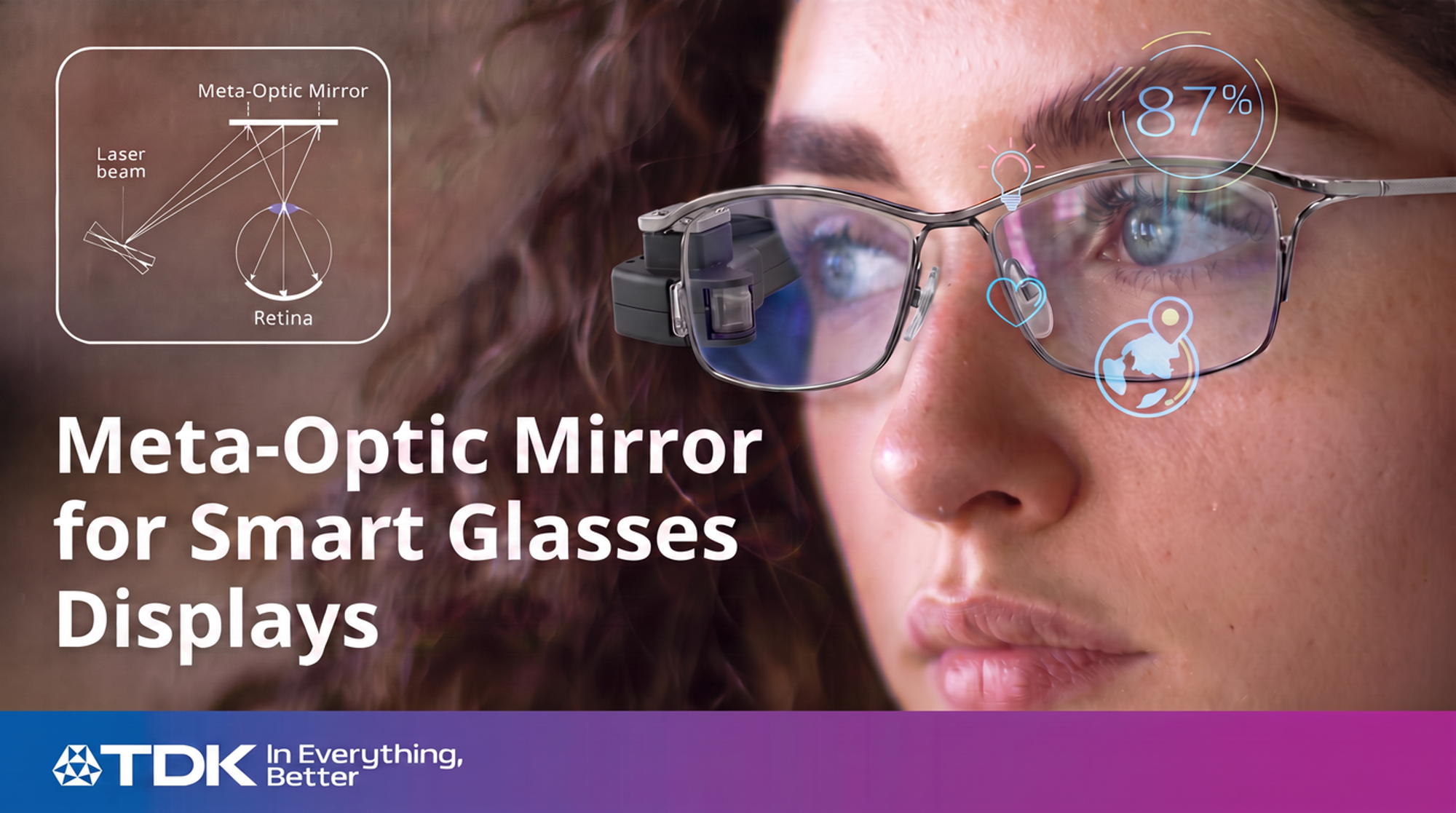
It is anticipated that smart glasses will become a next-generation device equipped with AI technology. Worn on the face, it is very important for them to have a stylish design, but there have been significant issues with the displays used in smart glasses; one example is the appearance of rainbow patterns, visible to someone looking straight at your glasses. As a solution, TDK has developed a display that utilizes a meta-optic mirror based on microscopic nanostructures to overcome the limitations of conventional optical systems, making it possible to create stylish smart glasses.
[Assessment]
Through integration with AI, smart glasses are expected to become a next-generation digital device. But in addition to display performance, they need to offer designs that are suitable for everyday wear, featuring compact, slim optical systems. All of this is key to widespread adoption. TDK has developed a meta-optic mirror that controls the direction in which light is reflected using nano-scale reflective structures. This technology has made it possible to replace the large, curved mirrors previously required for virtual retinal displays (VRDs), embedding a thinner, flatter mirror into the lens. This ensures high transparency while suppressing rainbow patterns caused by light interference, resulting in smart glasses that look similar to ordinary glasses.
Thanks to utilizing a component technology based on nanostructures, this technology avoids the aesthetic limitations inherent in conventional VRD approaches, enabling a simplified optical system that is not dependent on expensive waveguides. Its further development is highly anticipated as a manufacturing technology that will advance practical smart glass applications and support the growth of a market for next-generation interfaces.
CEATEC AWARD 2026: The Minister of Digital Affairs Award
HMAX™ by Hitachi: AI Solutions Driving the Realization of a Harmonized Society
Hitachi, Ltd. (General Exhibits, Booth No.7H010)

[Outline]
HMAX™ is a suite of AI solutions for social infrastructure offered by the Japanese company Hitachi to clients worldwide. HMAX™ connects mission-critical sectors—such as railways, power, industry, and finance—through AI and data to enhance operations, maintenance, control, and decision-making. Maxim use of the OT (operational technology), IT, product technologies and domain expertise cultivated by Hitachi over many years, HMAX™ continuously optimizes social infrastructure, enhancing operational efficiency while ensuring safety and security. It is contributing to the realization of a sustainable and resilient Society 5.0.
[Assessment]
Increasingly severe issues are facing the people who support the social infrastructure; these include labor shortages, a decline in the number of skilled engineers, and aging equipment. Designed for the railway, power, industrial, and financial sectors, HMAX™ by Hitachi is a suite of AI solutions that combines AI with the OT, IT, product technologies, and domain expertise that Hitachi has cultivated over the years. Designed to enhance operations, maintenance, control, and decision-making, it not only analyzes field data but also makes use of such analyses for actual operations and control, resulting in continuous improvement.
When it comes to social infrastructure, safety and reliability are essential. Hitachi is distinguished by its ability to integrate AI into actual operating equipment and systems. The company intends to expand from offering predictive maintenance and operational efficiency improvements for individual pieces of equipment to providing optimization that spans multiple pieces of equipment and operations. As an initiative that harnesses AI to enhance the safety, security, and resilience of social infrastructure, there are high expectations for the future development of HMAX™.
CEATEC AWARD 2026: Excellence Award
Triple Free Laundry: A Drainless Recirculating Washing System
Sharp Corporation (General Exhibits, Booth No.5H340)
%E6%8E%92%E6%B0%B4%E3%83%AC%E3%82%B9%E5%BE%AA%E7%92%B0%E5%9E%8B%E6%B4%97%E6%BF%AF%E3%82%B7%E3%82%B9%E3%83%86%E3%83%A0%E3%83%88%E3%83%AA%E3%83%97%E3%83%AB%E3%83%95%E3%83%AA%E3%83%BC%E3%83%A9%E3%83%B3%E3%83%89%E3%83%AA%E3%83%BC_%E3%82%B5%E3%83%A0%E3%83%8D%E3%82%A4%E3%83%AB%E7%94%BB%E5%83%8F.png)
[Outline]
This drainless recirculating laundry system allows for the repeated reuse of wash water. A proprietary filter, optimized for this purpose, filters the used water as it is drained. This regenerates water suitable for washing clothes, thereby achieving significant water savings. The system’s compact design means it can be installed in a variety of locations lacking a water supply or drainage. It contributes to maintaining and improving sanitary conditions in places like evacuation shelters where securing water and drainage for washing is difficult, and in regions with limited water resources.
[Assessment]
At evacuation shelters, interruptions to the water supply and limited drainage systems can mean it is difficult to do laundry, making it hard to maintain daily hygiene by keeping clothes clean. Sharp’s Triple Free Laundry is a recycling laundry system that employs a multi-stage process to purify and reuse wash water. Designed to be used as a standard laundry system when there is a normal water supply and drainage, in emergencies it operates in recirculating mode, allowing people to continue doing their laundry without a water supply or drainage.
This system represents of a “phase-free” approach—that is, appliances for everyday life can also be used during emergencies, thus avoiding the need to store equipment exclusively for disaster relief. Since it does not rely on a fixed water supply or drainage system, Triple Free Laundry is suited not only for evacuation shelters but also for ships and remote islands with limited water resources, as well as in areas lacking a developed water infrastructure. It has been recognized for evolving home appliance technology and adding value by creating a washing machine that can be used anywhere, thereby offering a new option for maintaining a vital part of daily life even in places with water constraints.
CEATEC AWARD 2026: Excellence Award
Connecting Human Motion to Physical AI—High-Precision Hand Tracking for AI and Robotics
Murata Manufacturing Co., Ltd./Melt Interface Technologies Inc. (General Exhibits, Booth No.7H340)

[Outline]
This technology captures the expertise inherent in the movements of the human hand, generating data that can be used to train AI and robots. Equipped with Murata’s proprietary compact, high-sensitivity LF antenna, Melt Interface Technologies’ ContactGlove3 Pro uses EMF (electromagnetic field) technology to track the movements of all five fingers with high precision and without the need for an external camera, so an unobstructed view of the hand is not necessary. Capable of continuous operation for more than 8 hours, the glove collects data that can be utilized for robot training, remote operation, and skills transfer, offering access to real-world data in the era of physical AI.
[Assessment]
For physical AI to support or replace human labor, high-quality data for learning real-world tasks is essential. Conventionally, however, stable capture of the delicate movements of human fingers over extended periods is difficult because cameras can be obstructed and IMUs can accumulate errors. To address this, the ContactGlove3 Pro from Murata Manufacturing and Melt Interface Technologies uses EMF to track the position and orientation of all five fingers, continuously capturing data during actual work tasks.
It is not just a matter of capturing skeletal coordinates: by linking hand movements to the work context—in other words, recording what action is being performed during which process—the resulting data becomes meaningful for AI. If the hand movements of a skilled worker can be saved as high-quality data, the scope of potential applications will expand to include robot training, skills transfer, and even replicating intricate manual tasks that were previously difficult to automate. This has been recognized as a foundational technology, capturing source data needed to support the implementation of physical AI, including humanoid robots, in society.
CEATEC AWARD 2026: Excellence Award
Early Cancer Detection with AI-powered Odor Sensors: A New Pre-screening Approach to Catching Warning Signs Before Symptoms Appear
Taiyo Yuden Co., Ltd. (General Exhibits, Booth No.8H030)
[Outline]
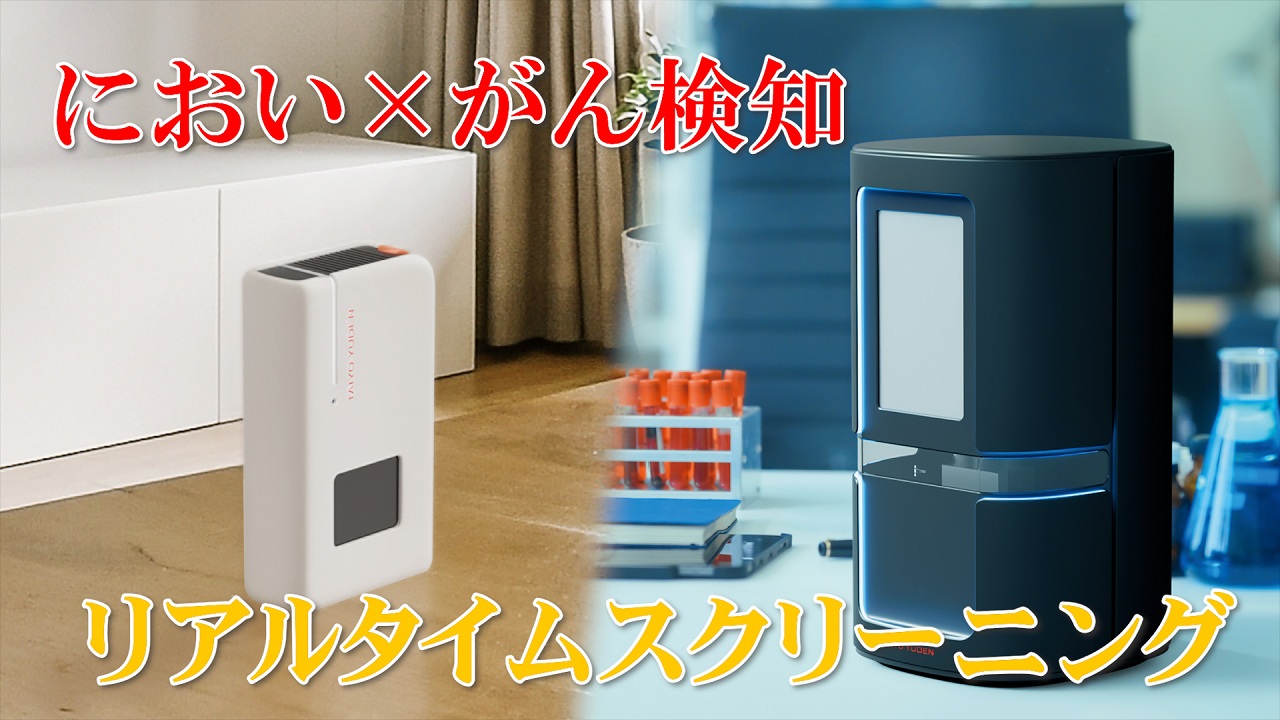
This non-invasive, real-time screening for cancer using odor sensors is an innovative service that detects physiological changes from urine samples. Highly sensitive odor detection is performed by proprietary QCM sensors and sensing membranes combined with AI analytics. Without interrupting daily life, this simple approach to screening enables regular monitoring for warning signs and encourages people to seek medical attention before they notice any symptoms, thus contributing to the realization of a society that prioritizes well-being.
[Assessment]
When it comes to the early detection of cancer, developing more advanced screening technologies is important, but the actual challenge is to encourage people without noticeable symptoms to undergo screening. Taiyo Yuden has developed an odor-sensing technology that uses its proprietary QCM sensor to detect reaction patterns of VOCs (volatile organic compounds) in urine for AI-based analysis. Stage Zero Screening is how the company describes this approach to detecting physiological changes without placing a burden on the body, encouraging individuals to have tests done at medical institutions if necessary. This is not intended to replace diagnosis, but to foster awareness beforehand.
This replicates olfaction, one of our five senses, capturing smells as data that can be used for comparative analysis. It was made possible by applying the company’s expertise in materials, thin-film and microfabrication technologies—developed for the electronics components industry—to the health sector. By increasing opportunities in daily life for people to seek medical care, it encourages them to take the first step and get tested, something that advances in screening and diagnostic technologies alone have been unable to achieve. This initiative has been recognized for its approach to supporting early cancer detection not only through medical technology but also by motivating people to seek medical care.
CEATEC AWARD 2026: Category awards
█ Innovation Award
Next-generation Process Optimization Platform
AIxtal Corporation (Next Generation Park, Booth No. 4H019)
[Outline]
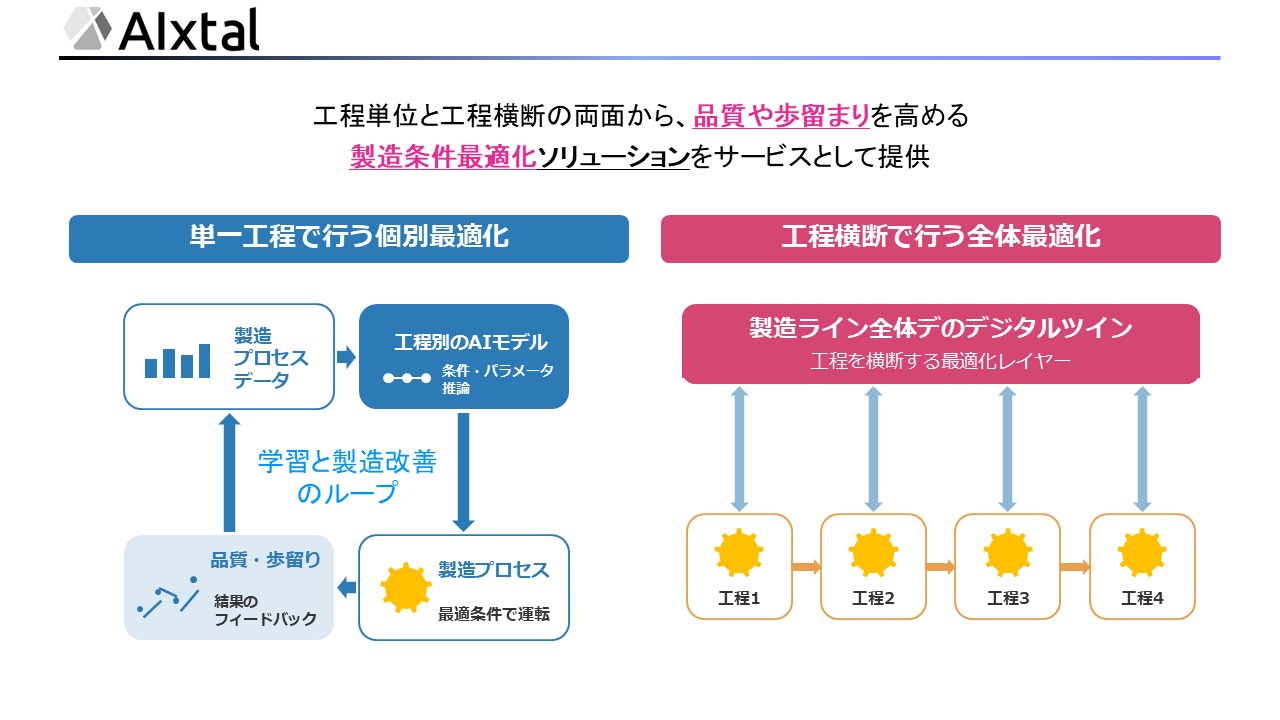
This platform uses process informatics (PI), which integrates AI and physical simulation, to replicate an entire production line within digital twins to optimize multiple processes end-to-end. By building accurate models from small amounts of data, it significantly reduces prototyping and development time, contributing to enhanced quality, higher yields, and the advancement of digital transformation (DX) in development and manufacturing processes across all manufacturing industries.
[Assessment]
Despite increasing use of AI for defect detection in the manufacturing industry, simply identifying defects early does not reduce the actual number of defects. Aixtal’s Next-generation Process Optimization Platform brings together manufacturing data from disparate equipment, processes, and inspections, and harnesses AI to model the relationship between manufacturing conditions and results. By linking multiple process digital twins, it looks for conditions across the production line that enhance overall performance and product yield rather than focusing on optimizing individual processes.
This platform fundamentally changes the approach to manufacturing development by transferring the trial-and-error approach traditionally repeated in the factory to a digital space, and translating the experience and process-specific knowledge of skilled workers into reusable data assets. Its strength lies in an extensive track record covering diverse manufacturing environments, including the development of data infrastructure and workforce training, in addition to providing analytical support. The platform has been recognized for its ability to bring about a transformational shift from manufacturing reliant on local optimization and individual expertise, to data-driven manufacturing development aimed at overall optimization.
█ Innovation Award
Surgical VLM: Japan’s First Surgery-specialized Generative AI That Understands the Theater Context and Converses with Surgeons
Direava Inc. (General Exhibits, Booth No.5H440)
[Outline]
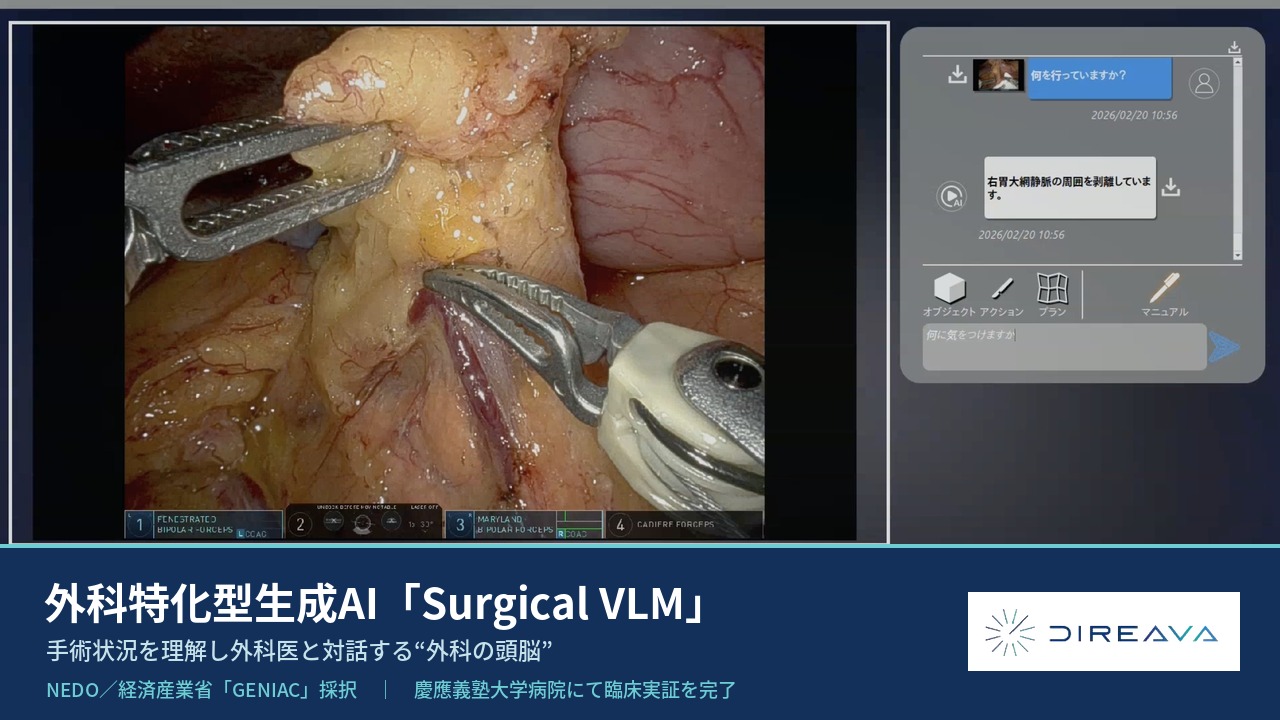
Surgical VLM is Japan’s first surgery-specific generative AI capable of analyzing surgical endoscopic images in real time, recognizing anatomical structures and cognizing surgical procedures. Moreover, it can provide conversational prompts in Japanese indicating what the surgeon should watch out for and what the next step should be. To suppress hallucinations, it has been trained exclusively on data screened by medical specialists. In real-time testing conducted in a university hospital operating theater, it achieved 84.7% anatomical accuracy and 82.9% clinical utility. It thus has potential as a “surgical brain,” assisting with everything from surgical training to actual operations and even enabling automation in the future.
[Assessment]
The use of AI to assist in surgical procedures has been limited mainly to the visual recognition of organs and blood vessels from a video feed. However, Direava’s Surgical VLM is a surgery-specific generative AI that integrates vision and language. From endoscopic images, it can recognize anatomical structures and comprehend the surgical context, using natural language for explanation and discussion. It is trained on data that has been specifically developed and supervised by surgeons. The company is conducting real-time demonstrations in university hospital operating theaters, and it has plans for a phased rollout, starting with training for surgeons.
What sets this approach apart is that, rather than simply applying general-purpose AI to the medical field, it draws on expert data and evaluation criteria developed by actual surgeons to determine what a surgeon should look out for and what the next step should be. It is hoped to create a learning environment using video recordings of surgery so that junior doctors and medical students can understand the reasoning behind an expert’s decisions, with the future aim of providing support in the form of verification and recommendations during actual surgery. As a possible solution to such issues as the shortage of surgeons, regional disparities in educational opportunities and varying levels of experience, it is hoped that Surgical VLM will find future practical applications and develop as a new platform for offering expert knowledge in a shareable format.
█ Global Innovation Award
LifeBox for Renewable Energy
NoorNation (Global Park, Booth No.4H501)
[Outline]
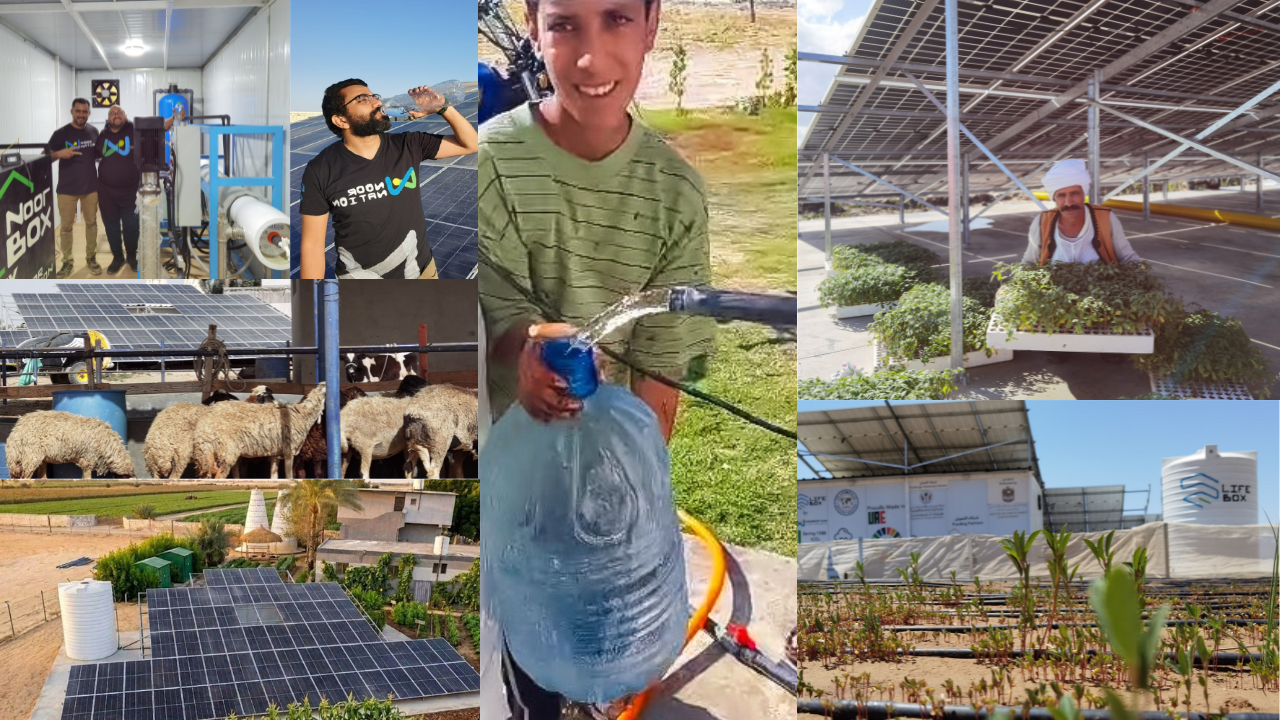
LifeBox is a solar power solution, not dependent on batteries, for supplying clean electricity and safe water to farms and rural communities. It combines solar power generation, water pumping, and water treatment in a single, ready-to-use system, reducing reliance on diesel generators and other power sources. IoT-based remote monitoring enables real-time visualization of operational status as well as how much water and electricity is being produced. It is also scalable to meet different requirements. As an integrated solution for energy and water supply, LifeBox realizes sustainable and reliable infrastructure.
[Assessment]
Designed for regions where there is insufficient development of power grids and water infrastructure, this modular solution integrates solar power generation, water pumping, and water treatment. It operates without batteries and offers IoT-based remote monitoring and control. LifeBox thus provides clean energy and safe water while reducing dependence on diesel generators and fragile power supplies. The system can also be scaled up to suit different applications and size requirements. LifeBox is intended for a wide range of uses, including the support of agriculture and rural communities.
This project has been recognized not only for the individual technologies it employs for solar power generation and water treatment, but also for the concept of combining them into a single package to address regional infrastructure challenges. It is hoped that it will find applications within Japan, but particularly important is its social significance as a potential solution for the energy and water problems faced by people in various regions of the world. Expectations are high for global expansion.
█ Transformation Award
AI Agents for Training Robots—An Autonomous Physical AI R&D Platform That Manages Code Development Through to Real-World Deployment
Amazon Web Services Japan G.K. (X [Transformation] Park, Booth No.4H535)
[Outline]
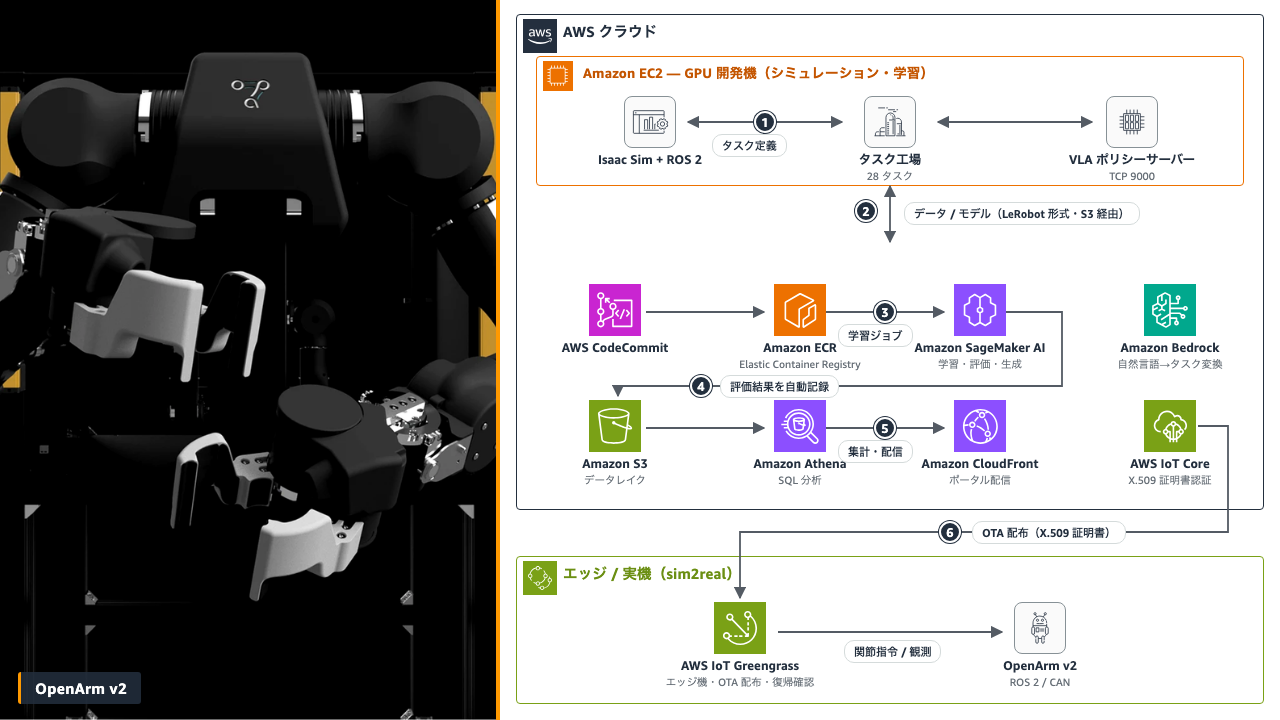
Before a robot can perform a new task, humans must go through a repetitive cycle of instruction, testing, and correction—a process that consumes both time and manpower. This exhibit demonstrates how AI agents can take the place of humans to perform such repetitive training. Generative AI does this by creating a virtual training environment and demonstration examples, teaching the physical AI, evaluating its performance, and correcting mistakes before moving on to the next step. This cycle, or agent loop, continues to run without human intervention. At the booth, this agent loop, built on AWS, is demonstrated with an actual robot.
[Assessment]
To implement physical AI in the real world depends not only on the performance of robots and foundation models. It requires a large number of expert personnel and significant time to build specific environments, design operations, conduct evaluations, and make adjustments. Advances are being made in software development for AI agent autonomous improvement loops, and AWS has extended support for these to physical AI R&D. AI manages the entire process—from building virtual environments in simulators to trialing, evaluating, and refining—delivering the generated control code to physical systems and sending field data back to the cloud for further refinement. AWS is validating this agent loop together with the physical systems.
The goal is not the robot itself, but a revolution in how robots are trained. Instead of training robots how to execute individual movements, engineers will be designing environments and rules so that AI can engage in trial and error while they oversee the results. In a virtual environment, failures are absorbed, whereas in the case of physical systems, safety constraints are imposed externally on the AI and human consent is a prerequisite. There are high expectations for its future development as an R&D foundation that reduces the burden of making adjustments for each physical site, accelerating the adoption of physical AI and broadening its scope.
█ Next Generation Award
Creating a New Global Market with Revolutionary New Materials and Ultra-Fast Heat Detection
TopoLogic Inc. (Next Generation Park, Booth No.4H141)
.png)
[Outline]
TopoLogic is a deep-tech startup spun out of the University of Tokyo that is developing TL-SENSING, a heat flux sensor using innovative topological materials. The company is applying its technology, which detects actual heat generation at ultra-high speeds, across a wide range of fields. Included are applications for the detection of abnormal battery overheating, services related to human and animal body heat, hydrogen sensing, and predictive maintenance for industrial equipment. By embedding TL-SENSING in many kinds of systems, TopoLogic will create a new global market.
[Assessment]
When equipment malfunctions or batteries overheat, it may be already too late to take action once the temperature rise has become apparent. TopoLogic’s TL-SENSING is a heat flux sensor that utilizes the anomalous Nernst effect (ANE) in topological materials to detect not the temperature itself, but the direction and magnitude of heat energy flow. Making the most of its compact, slim design and rapid response time, the company aims to expand heat flux measurement, hitherto limited to research and evaluation, to applications that embed sensing within devices.
By switching from measuring heat as a result to using heat as information for early detection and control, applications will expand to include safety monitoring of batteries and power semiconductors, predictive maintenance for industrial equipment, thermal management in data centers, and hydrogen leak detection. The flow of heat represents a new information axis with the potential to transform the design of equipment and systems in terms of both safety and energy efficiency. As a foundational device that will drive the creation of a new sensing market, there are high expectations for its future practical application and development.
█ Next Generation Award
TRAILS: Spatial AI for Positioning Using Only a Smartphone, Even Without GPS Coverage
Zeteoh, Inc. (Next Generation Park, Booth No.4H242)
[Outline]
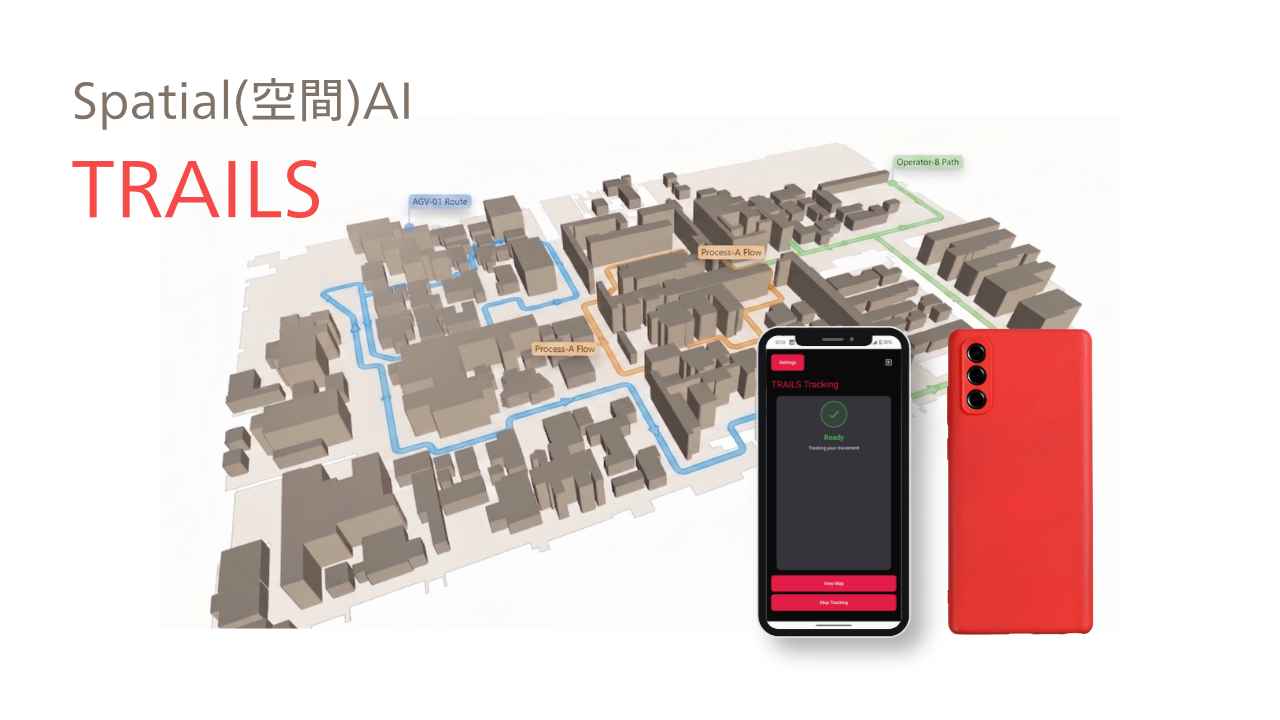
TRAILS is a spatial AI that uses only a smartphone or wearable device to locate people and assets with an accuracy of 1 to 3 meters. It works where there are no GPS signals—indoors, underground and in tunnels—and requires neither anchors nor Wi-Fi. On the benchmarks for inertial odometry used by researchers, TRAILS outperforms state-of-the-art solutions, and it gets to work straightaway, even in buildings it has never been trained on. It has undergone independent verification by the Central Japan Railway Company aboard a Shinkansen train traveling at 285 km/h. For location tracking, it lays the foundation for physical AI in a wide range applications, from firefighting and disaster response to data collection at industrial sites. TRAILS has been patented.
[Assessment]
In spaces where GPS signals cannot penetrate—such as factories, basements, and tunnels—the usual way to track the location and flow patterns of people or objects is to install beacons or Wi-Fi infrastructure, but the burden of installation and maintenance presents a growing challenge for anyone intent on continuous data collection. A solution is offered by Zeteoh’s TRAILS, a spatial AI that uses a pre-trained spatial model to correct data from inertial sensors, such as those in smartphones. TRAILS can thus estimate the device’s location without the need for anchors (fixed reference points) inside a building. Making use of existing information such as building blueprints, it can thus be deployed without dedicated infrastructure.
Value lies not in simply locating someone or something, but in knowing what lies ahead. By converting the movement of people and assets into continuous data, it becomes possible to visualize activities that previously went unnoticed. This information can lead to optimized traffic flow in factories and warehouses, accurate maintenance records, analyzing skills, and locating assets at disaster sites. Moreover, spatial data provides a foundation for operational AI and physical AI to understand the real world. TRAILS has been recognized for its practicality—enabling continuous data collection by leveraging existing devices to track movement—as well as its potential to develop such data assets into a foundation for next-generation AI.
█ Mobility Innovation Award
Snow Removal Drone Made in Japan for Automating Dangerous and Physically Demanding Work
Everblue Technologies Inc. (Japan Mobility Show bizweek 2026 exhibitor)
[Outline]
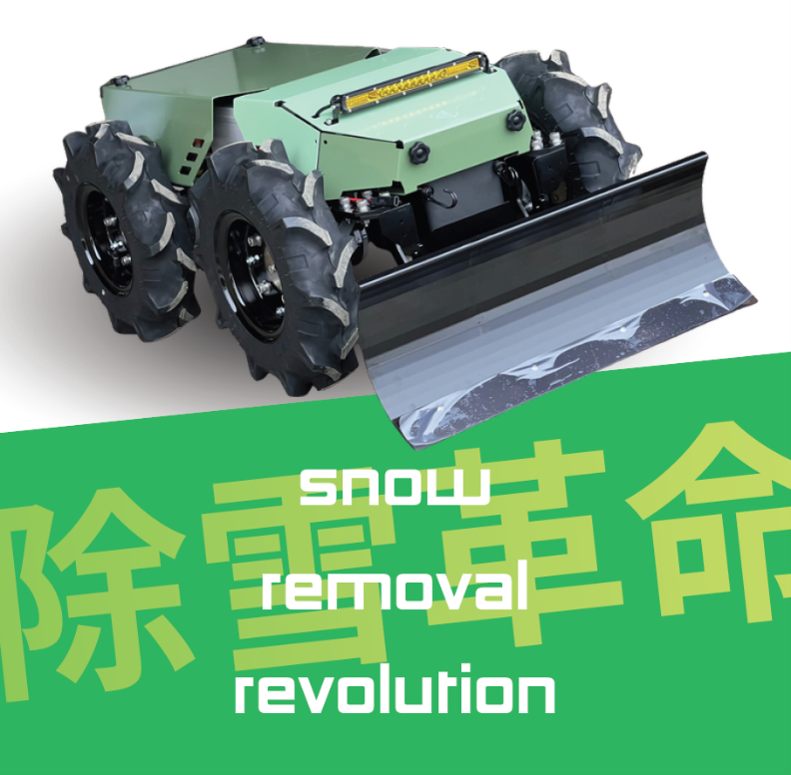
This drone is a compact electric snowplow that offers remote operation and autonomous navigation. Utilizing high-precision RTK GNSS positioning and 2D LiDAR, it can automatically generate a snow-clearing route within a designated area and then follow it. Its compact design allows it to operate in narrow spaces, and being electric it is quiet. Also, it will automatically stop when an obstacle is detected. Snow-clearing can be dangerous and physically demanding, but this drone can operate in areas that are difficult for people to access, reducing the need for manual labor and improving safety.
[Assessment]
In regions with heavy snowfall, it is becoming increasingly difficult to find workers for snow removal. The problem is exacerbated by a population that is both aging and shrinking. Nonetheless, snow removal is critical for daily life and logistics. Yet it is physically demanding work that involves slippery surfaces, putting workers at risk of falling over or meeting with an accident. Offering a solution is the Snow Removal Drone of Everblue Technologies, a compact electric unmanned ground vehicle (UGV) that uses control technology developed for aquatic drones to operate on land. Its four-wheel independent electric AWD system provides powerful thrust and off-road capability, while RTK GNSS and 2D LiDAR support remote operation and autonomous navigation.
Another key feature of this drone is its versatility: although snow removal was the starting point, the drone has been designed as a platform with potential for a wide range of applications such as transportation, towing, and security, as well as for use in factories and on construction sites. In environments where people have till now performed dangerous and physically demanding tasks, small vehicles like this can take the place of workers. In reducing the need for human labor, this approach demonstrates how regional and industrial functions can be maintained even as the available workforce shrinks. As the system is progressively deployed in the field, there are high expectations for its future development, involving further advancements in autonomy and multi-unit applications.
【 CEATEC AWARD 2026 】
CEATEC AWARD 2026 recognizes exceptional technologies, products, and services exhibited at CEATEC 2026 (excepting the Mobility Innovation Award). The CEATEC AWARD 2026 Judging Committee reviews entries submitted in advance by exhibitors, evaluating them from academic and technical perspectives as well as in terms of market potential and future prospects, to select those deemed to be outstanding and highly innovative.
---------------------------
CEATEC AWARD 2026 Judging Criteria
1. Ministerial awards (in order of establishment)
The Minister of Internal Affairs and Communications Award
The Minister of Internal Affairs and Communications Award is presented to a project (product, service, or the software and applications that support them) deemed to contribute most significantly to the development of the CPS/IoT community and the realization of Society 5.0. This includes the innovative utilization of information and communications networks, data, AI and IoT technologies in the age of IoT and Big Data, as well as establishing services based on the aforementioned technologies and including AI networking and digital services for use in local communities.
The Minister of Economy, Trade and Industry Award
The Minister of Economy, Trade and Industry Award is presented to a project (product, service, or the software and applications that support them) deemed to contribute most significantly to the development of the CPS/IoT community and the realization of Society 5.0. This includes manufacturing that creates new value, solves problems and promotes innovation in daily life, society, business and industry through the use of AI, robotics, Big Data, and other technologies; services that utilize IoT; and the development of cross-sectional technologies that promote the digital transformation of industry.
The Minister of Digital Affairs Award
The Minister of Digital Affairs Award is presented to a project (product, service, or the software and applications that support them) deemed to contribute most significantly to the creation of a prosperous lifestyle and a resilient society, where people can choose the most appropriate services for their life stage. This includes unlocking the fullest potential of digital technologies to solve diverse issues and contributing to the realization of a digital society on a global scale.
2. Excellence Award
The Excellence Award is presented to a project (product, service, or the software and applications that support them) deemed to be outstanding based on a comprehensive assessment of innovation, social impact, feasibility, market potential, and co-creation, and is recognized as having exceptional potential to contribute to future industrial and societal development and the creation of new value.
3. CEATEC AWARD 2026 CATEGORIES
Innovation Award
Presented to a project that demonstrates excellence in innovation, practical feasibility, and contribution to society. This includes new technologies, products, services, software, applications, solutions, business models, and other initiatives that contribute to the realization of Society 5.0 and support the sustainable development of industry, business, society, and everyday life.
Transformation Award
Presented to a project that is recognized for its excellence in innovation, feasibility, and social impact. This includes technologies, products, services, and solutions that leverage digital and advanced technologies to drive transformation across industry, business, society, and everyday life.
Global Innovation Award
Presented to a technology, product, or service exhibited by an international exhibitor that is deemed outstanding in terms of innovation, practical feasibility, market potential, and contribution to society.
Next Generation Award
Presented to an outstanding entry from a startup company, university, or research institution that is developing innovative technologies, products, services, software, applications, or business models and striving to create new markets and social value. Entries are evaluated based on technological excellence, future potential, marketability, and contribution to society.
Mobility Innovation Award
Presented to an outstanding mobility-related technology, product, service, or solution that demonstrates excellence in innovation, practicality, real-world applicability, and contribution to the future of society.
CEATEC AWARD 2026 Judging Committee
Academic societies & universities (in alphabetical order by group)
The Information Processing Society of Japan (IPSJ)
The Institute of Electrical Engineers of Japan (IEEJ)
The Institute of Electronics, Information and Communication Engineers (IEICE)
The Institute of Image Information and Television Engineers (ITE)
The Japanese Society for Artificial Intelligence (JSAI)
Nagoya University
Research and media-related organizations (in alphabetical order)
ITmedia, Inc.
MM Research Institute, Ltd.
Nikkan Kogyo Shimbun, Ltd.
Nikkei Business Publications, Inc.
Techno Core Co., Ltd.,
Observers
Ministry of Internal Affairs and Communications; Ministry of Economy, Trade and Industry; Digital Agency (listed in order of establishment)
Japan Electronics and Information Technology Industries Association (JEITA)*
Communications and Information Network Association of Japan (CIAJ)**
Software Association of Japan (SAJ)**
* CEATEC 2026 organizer
** CEATEC 2026 co-sponsors
[ CEATEC 2026 Official Website: https://www.ceatec.com/ ]
Official Name CEATEC 2026
Date & Time October 13 (Tue) to 16 (Fri), 2026 10:00~17:00
Venue Makuhari Messe
Admission Free of charge (All visitors are required to register in advance)
Organizer Japan Electronics and Information Technology Industries Association (JEITA)
Co-sponsors Communications and Information Network Association of Japan (CIAJ)
Software Association of Japan (SAJ)
Press Release
Japan Electronics and Information Technology Industries Association
CEATEC AWARD 2026
Announcement of the recipients of The Minister of Internal Affairs and Communications Award,
The Minister of Economy, Trade and Industry Award, The Minister of Digital Affairs Award, the Mobility Innovation Award and other awards
The Japan Electronics and Information Technology Industries Association (JEITA)—whose Representative Director/Chairperson is Takashi Niino, also serving as Director and Chairperson of NEC Corporation—has announced the winners of the CEATEC AWARD 2026, which recognizes technologies, products, and services exhibited at CEATEC 2026. The winners include recipients of the Minister of Internal Affairs and Communications Award, the Minister of Economy, Trade and Industry Award, the Minister of Digital Affairs Award, and the Mobility Innovation Award. CEATEC AWARD recognizes technologies, products, and services exhibited at CEATEC—an event that brings together cutting-edge technologies from across Japan and around the world—and which are judged to be particularly innovative and outstanding. The criteria employed in deciding these awards are multifaceted, taking into account academic and technical perspectives as well as market potential and future prospects. The CEATEC AWARD program ultimately aims to contribute to introducing outstanding technologies to society, promoting the creation and development of new value and markets, and serving to further stimulate industry. Award recipients are selected following a rigorous review by the CEATEC AWARD Judging Committee, whose members are representatives of relevant academic societies and specialized media.
CEATEC AWARD 2026 The Minister of Internal Affairs and Communications Award
Giving Physical AI Ears: TUSS (Task-aware Unified Source Separation) Technology Distinguishes Diverse Sounds, from Machine Anomalies to Human Voices
(Mitsubishi Electric Group)
CEATEC AWARD 2026 The Minister of Economy, Trade and Industry Award
Meta-Optic Mirror for Smart Glasses Displays
(TDK Corporation)
CEATEC AWARD 2026 The Minister of Digital Affairs Award
HMAX™ by Hitachi: AI Solutions Driving the Realization of a Harmonized Society
(Hitachi, Ltd.)
*Outlines and assessments for these and other awards may be found on the following pages.
CEATEC AWARD 2026 Recipients
CEATEC AWARD 2026: The Minister of Internal Affairs and Communications Award
Giving Physical AI Ears: TUSS (Task-aware Unified Source Separation) Technology Distinguishes Diverse Sounds, from Machine Anomalies to Human Voices
Mitsubishi Electric Group (General Exhibits, Booth No.8H412)
[Outline]
The company has developed technology for TUSS (Task-aware Unified Source Separation) to enable physical AI to accurately distinguish sounds in a wide variety of environments. In response to prompts designating which sounds are to be extracted, this technology enables a single AI model to process mixed audio, captured by a microphone, to separate and extract the individual target sounds. This capability contributes to enhancing the reliability of physical AI with complex situational awareness based on sound.
[Assessment]
In factories and public spaces, the various sounds of machinery and human voices layered over the ambient noise make it difficult for AI to accurately capture the required target sound. The TUSS technology developed by Mitsubishi Electric Group allows users to specify the type of sound they wish to extract from an audio recording combining several sources. To do this, a single AI model is employed to perform the various tasks—such as speech separation, speech enhancement, and machinery noise separation—that previously required a dedicated model for each specific application. A key feature of this technology is its flexibility: there is no need to create separate models for different situations or objectives.
TUSS technology is intended for use with robots, surveillance equipment, and industrial machinery, which can benefit from its rapid processing speed and the fact that it is not dependent on multiple microphones. By adding auditory information to physical AI—which has so far focused on still and moving images—TUSS helps to improve the accuracy of anomaly detection, speech recognition, and on-site logging. As a foundational technology that makes sophisticated use of sound as data to broaden the scope of AI’s understanding of the real world, it is expected to see widespread adoption.
CEATEC AWARD 2026: The Minister of Economy, Trade and Industry Award
Meta-Optic Mirror for Smart Glasses Displays
TDK Corporation (General Exhibits, Booth No.5H261)
[Outline]
It is anticipated that smart glasses will become a next-generation device equipped with AI technology. Worn on the face, it is very important for them to have a stylish design, but there have been significant issues with the displays used in smart glasses; one example is the appearance of rainbow patterns, visible to someone looking straight at your glasses. As a solution, TDK has developed a display that utilizes a meta-optic mirror based on microscopic nanostructures to overcome the limitations of conventional optical systems, making it possible to create stylish smart glasses.
[Assessment]
Through integration with AI, smart glasses are expected to become a next-generation digital device. But in addition to display performance, they need to offer designs that are suitable for everyday wear, featuring compact, slim optical systems. All of this is key to widespread adoption. TDK has developed a meta-optic mirror that controls the direction in which light is reflected using nano-scale reflective structures. This technology has made it possible to replace the large, curved mirrors previously required for virtual retinal displays (VRDs), embedding a thinner, flatter mirror into the lens. This ensures high transparency while suppressing rainbow patterns caused by light interference, resulting in smart glasses that look similar to ordinary glasses.
Thanks to utilizing a component technology based on nanostructures, this technology avoids the aesthetic limitations inherent in conventional VRD approaches, enabling a simplified optical system that is not dependent on expensive waveguides. Its further development is highly anticipated as a manufacturing technology that will advance practical smart glass applications and support the growth of a market for next-generation interfaces.
CEATEC AWARD 2026: The Minister of Digital Affairs Award
HMAX™ by Hitachi: AI Solutions Driving the Realization of a Harmonized Society
Hitachi, Ltd. (General Exhibits, Booth No.7H010)
[Outline]
HMAX™ is a suite of AI solutions for social infrastructure offered by the Japanese company Hitachi to clients worldwide. HMAX™ connects mission-critical sectors—such as railways, power, industry, and finance—through AI and data to enhance operations, maintenance, control, and decision-making. Maxim use of the OT (operational technology), IT, product technologies and domain expertise cultivated by Hitachi over many years, HMAX™ continuously optimizes social infrastructure, enhancing operational efficiency while ensuring safety and security. It is contributing to the realization of a sustainable and resilient Society 5.0.
[Assessment]
Increasingly severe issues are facing the people who support the social infrastructure; these include labor shortages, a decline in the number of skilled engineers, and aging equipment. Designed for the railway, power, industrial, and financial sectors, HMAX™ by Hitachi is a suite of AI solutions that combines AI with the OT, IT, product technologies, and domain expertise that Hitachi has cultivated over the years. Designed to enhance operations, maintenance, control, and decision-making, it not only analyzes field data but also makes use of such analyses for actual operations and control, resulting in continuous improvement.
When it comes to social infrastructure, safety and reliability are essential. Hitachi is distinguished by its ability to integrate AI into actual operating equipment and systems. The company intends to expand from offering predictive maintenance and operational efficiency improvements for individual pieces of equipment to providing optimization that spans multiple pieces of equipment and operations. As an initiative that harnesses AI to enhance the safety, security, and resilience of social infrastructure, there are high expectations for the future development of HMAX™.
CEATEC AWARD 2026: Excellence Award
Triple Free Laundry: A Drainless Recirculating Washing System
Sharp Corporation (General Exhibits, Booth No.5H340)
[Outline]
This drainless recirculating laundry system allows for the repeated reuse of wash water. A proprietary filter, optimized for this purpose, filters the used water as it is drained. This regenerates water suitable for washing clothes, thereby achieving significant water savings. The system’s compact design means it can be installed in a variety of locations lacking a water supply or drainage. It contributes to maintaining and improving sanitary conditions in places like evacuation shelters where securing water and drainage for washing is difficult, and in regions with limited water resources.
[Assessment]
At evacuation shelters, interruptions to the water supply and limited drainage systems can mean it is difficult to do laundry, making it hard to maintain daily hygiene by keeping clothes clean. Sharp’s Triple Free Laundry is a recycling laundry system that employs a multi-stage process to purify and reuse wash water. Designed to be used as a standard laundry system when there is a normal water supply and drainage, in emergencies it operates in recirculating mode, allowing people to continue doing their laundry without a water supply or drainage.
This system represents of a “phase-free” approach—that is, appliances for everyday life can also be used during emergencies, thus avoiding the need to store equipment exclusively for disaster relief. Since it does not rely on a fixed water supply or drainage system, Triple Free Laundry is suited not only for evacuation shelters but also for ships and remote islands with limited water resources, as well as in areas lacking a developed water infrastructure. It has been recognized for evolving home appliance technology and adding value by creating a washing machine that can be used anywhere, thereby offering a new option for maintaining a vital part of daily life even in places with water constraints.
CEATEC AWARD 2026: Excellence Award
Connecting Human Motion to Physical AI—High-Precision Hand Tracking for AI and Robotics
Murata Manufacturing Co., Ltd./Melt Interface Technologies Inc. (General Exhibits, Booth No.7H340)
[Outline]
This technology captures the expertise inherent in the movements of the human hand, generating data that can be used to train AI and robots. Equipped with Murata’s proprietary compact, high-sensitivity LF antenna, Melt Interface Technologies’ ContactGlove3 Pro uses EMF (electromagnetic field) technology to track the movements of all five fingers with high precision and without the need for an external camera, so an unobstructed view of the hand is not necessary. Capable of continuous operation for more than 8 hours, the glove collects data that can be utilized for robot training, remote operation, and skills transfer, offering access to real-world data in the era of physical AI.
[Assessment]
For physical AI to support or replace human labor, high-quality data for learning real-world tasks is essential. Conventionally, however, stable capture of the delicate movements of human fingers over extended periods is difficult because cameras can be obstructed and IMUs can accumulate errors. To address this, the ContactGlove3 Pro from Murata Manufacturing and Melt Interface Technologies uses EMF to track the position and orientation of all five fingers, continuously capturing data during actual work tasks.
It is not just a matter of capturing skeletal coordinates: by linking hand movements to the work context—in other words, recording what action is being performed during which process—the resulting data becomes meaningful for AI. If the hand movements of a skilled worker can be saved as high-quality data, the scope of potential applications will expand to include robot training, skills transfer, and even replicating intricate manual tasks that were previously difficult to automate. This has been recognized as a foundational technology, capturing source data needed to support the implementation of physical AI, including humanoid robots, in society.
CEATEC AWARD 2026: Excellence Award
Early Cancer Detection with AI-powered Odor Sensors: A New Pre-screening Approach to Catching Warning Signs Before Symptoms Appear
Taiyo Yuden Co., Ltd. (General Exhibits, Booth No.8H030)
[Outline]
This non-invasive, real-time screening for cancer using odor sensors is an innovative service that detects physiological changes from urine samples. Highly sensitive odor detection is performed by proprietary QCM sensors and sensing membranes combined with AI analytics. Without interrupting daily life, this simple approach to screening enables regular monitoring for warning signs and encourages people to seek medical attention before they notice any symptoms, thus contributing to the realization of a society that prioritizes well-being.
[Assessment]
When it comes to the early detection of cancer, developing more advanced screening technologies is important, but the actual challenge is to encourage people without noticeable symptoms to undergo screening. Taiyo Yuden has developed an odor-sensing technology that uses its proprietary QCM sensor to detect reaction patterns of VOCs (volatile organic compounds) in urine for AI-based analysis. Stage Zero Screening is how the company describes this approach to detecting physiological changes without placing a burden on the body, encouraging individuals to have tests done at medical institutions if necessary. This is not intended to replace diagnosis, but to foster awareness beforehand.
This replicates olfaction, one of our five senses, capturing smells as data that can be used for comparative analysis. It was made possible by applying the company’s expertise in materials, thin-film and microfabrication technologies—developed for the electronics components industry—to the health sector. By increasing opportunities in daily life for people to seek medical care, it encourages them to take the first step and get tested, something that advances in screening and diagnostic technologies alone have been unable to achieve. This initiative has been recognized for its approach to supporting early cancer detection not only through medical technology but also by motivating people to seek medical care.
CEATEC AWARD 2026: Category awards
█ Innovation Award
Next-generation Process Optimization Platform
AIxtal Corporation (Next Generation Park, Booth No. 4H019)
[Outline]
This platform uses process informatics (PI), which integrates AI and physical simulation, to replicate an entire production line within digital twins to optimize multiple processes end-to-end. By building accurate models from small amounts of data, it significantly reduces prototyping and development time, contributing to enhanced quality, higher yields, and the advancement of digital transformation (DX) in development and manufacturing processes across all manufacturing industries.
[Assessment]
Despite increasing use of AI for defect detection in the manufacturing industry, simply identifying defects early does not reduce the actual number of defects. Aixtal’s Next-generation Process Optimization Platform brings together manufacturing data from disparate equipment, processes, and inspections, and harnesses AI to model the relationship between manufacturing conditions and results. By linking multiple process digital twins, it looks for conditions across the production line that enhance overall performance and product yield rather than focusing on optimizing individual processes.
This platform fundamentally changes the approach to manufacturing development by transferring the trial-and-error approach traditionally repeated in the factory to a digital space, and translating the experience and process-specific knowledge of skilled workers into reusable data assets. Its strength lies in an extensive track record covering diverse manufacturing environments, including the development of data infrastructure and workforce training, in addition to providing analytical support. The platform has been recognized for its ability to bring about a transformational shift from manufacturing reliant on local optimization and individual expertise, to data-driven manufacturing development aimed at overall optimization.
█ Innovation Award
Surgical VLM: Japan’s First Surgery-specialized Generative AI That Understands the Theater Context and Converses with Surgeons
Direava Inc. (General Exhibits, Booth No.5H440)
[Outline]
Surgical VLM is Japan’s first surgery-specific generative AI capable of analyzing surgical endoscopic images in real time, recognizing anatomical structures and cognizing surgical procedures. Moreover, it can provide conversational prompts in Japanese indicating what the surgeon should watch out for and what the next step should be. To suppress hallucinations, it has been trained exclusively on data screened by medical specialists. In real-time testing conducted in a university hospital operating theater, it achieved 84.7% anatomical accuracy and 82.9% clinical utility. It thus has potential as a “surgical brain,” assisting with everything from surgical training to actual operations and even enabling automation in the future.
[Assessment]
The use of AI to assist in surgical procedures has been limited mainly to the visual recognition of organs and blood vessels from a video feed. However, Direava’s Surgical VLM is a surgery-specific generative AI that integrates vision and language. From endoscopic images, it can recognize anatomical structures and comprehend the surgical context, using natural language for explanation and discussion. It is trained on data that has been specifically developed and supervised by surgeons. The company is conducting real-time demonstrations in university hospital operating theaters, and it has plans for a phased rollout, starting with training for surgeons.
What sets this approach apart is that, rather than simply applying general-purpose AI to the medical field, it draws on expert data and evaluation criteria developed by actual surgeons to determine what a surgeon should look out for and what the next step should be. It is hoped to create a learning environment using video recordings of surgery so that junior doctors and medical students can understand the reasoning behind an expert’s decisions, with the future aim of providing support in the form of verification and recommendations during actual surgery. As a possible solution to such issues as the shortage of surgeons, regional disparities in educational opportunities and varying levels of experience, it is hoped that Surgical VLM will find future practical applications and develop as a new platform for offering expert knowledge in a shareable format.
█ Global Innovation Award
LifeBox for Renewable Energy
NoorNation (Global Park, Booth No.4H501)
[Outline]
LifeBox is a solar power solution, not dependent on batteries, for supplying clean electricity and safe water to farms and rural communities. It combines solar power generation, water pumping, and water treatment in a single, ready-to-use system, reducing reliance on diesel generators and other power sources. IoT-based remote monitoring enables real-time visualization of operational status as well as how much water and electricity is being produced. It is also scalable to meet different requirements. As an integrated solution for energy and water supply, LifeBox realizes sustainable and reliable infrastructure.
[Assessment]
Designed for regions where there is insufficient development of power grids and water infrastructure, this modular solution integrates solar power generation, water pumping, and water treatment. It operates without batteries and offers IoT-based remote monitoring and control. LifeBox thus provides clean energy and safe water while reducing dependence on diesel generators and fragile power supplies. The system can also be scaled up to suit different applications and size requirements. LifeBox is intended for a wide range of uses, including the support of agriculture and rural communities.
This project has been recognized not only for the individual technologies it employs for solar power generation and water treatment, but also for the concept of combining them into a single package to address regional infrastructure challenges. It is hoped that it will find applications within Japan, but particularly important is its social significance as a potential solution for the energy and water problems faced by people in various regions of the world. Expectations are high for global expansion.
█ Transformation Award
AI Agents for Training Robots—An Autonomous Physical AI R&D Platform That Manages Code Development Through to Real-World Deployment
Amazon Web Services Japan G.K. (X [Transformation] Park, Booth No.4H535)
[Outline]
Before a robot can perform a new task, humans must go through a repetitive cycle of instruction, testing, and correction—a process that consumes both time and manpower. This exhibit demonstrates how AI agents can take the place of humans to perform such repetitive training. Generative AI does this by creating a virtual training environment and demonstration examples, teaching the physical AI, evaluating its performance, and correcting mistakes before moving on to the next step. This cycle, or agent loop, continues to run without human intervention. At the booth, this agent loop, built on AWS, is demonstrated with an actual robot.
[Assessment]
To implement physical AI in the real world depends not only on the performance of robots and foundation models. It requires a large number of expert personnel and significant time to build specific environments, design operations, conduct evaluations, and make adjustments. Advances are being made in software development for AI agent autonomous improvement loops, and AWS has extended support for these to physical AI R&D. AI manages the entire process—from building virtual environments in simulators to trialing, evaluating, and refining—delivering the generated control code to physical systems and sending field data back to the cloud for further refinement. AWS is validating this agent loop together with the physical systems.
The goal is not the robot itself, but a revolution in how robots are trained. Instead of training robots how to execute individual movements, engineers will be designing environments and rules so that AI can engage in trial and error while they oversee the results. In a virtual environment, failures are absorbed, whereas in the case of physical systems, safety constraints are imposed externally on the AI and human consent is a prerequisite. There are high expectations for its future development as an R&D foundation that reduces the burden of making adjustments for each physical site, accelerating the adoption of physical AI and broadening its scope.
█ Next Generation Award
Creating a New Global Market with Revolutionary New Materials and Ultra-Fast Heat Detection
TopoLogic Inc. (Next Generation Park, Booth No.4H141)
[Outline]
TopoLogic is a deep-tech startup spun out of the University of Tokyo that is developing TL-SENSING, a heat flux sensor using innovative topological materials. The company is applying its technology, which detects actual heat generation at ultra-high speeds, across a wide range of fields. Included are applications for the detection of abnormal battery overheating, services related to human and animal body heat, hydrogen sensing, and predictive maintenance for industrial equipment. By embedding TL-SENSING in many kinds of systems, TopoLogic will create a new global market.
[Assessment]
When equipment malfunctions or batteries overheat, it may be already too late to take action once the temperature rise has become apparent. TopoLogic’s TL-SENSING is a heat flux sensor that utilizes the anomalous Nernst effect (ANE) in topological materials to detect not the temperature itself, but the direction and magnitude of heat energy flow. Making the most of its compact, slim design and rapid response time, the company aims to expand heat flux measurement, hitherto limited to research and evaluation, to applications that embed sensing within devices.
By switching from measuring heat as a result to using heat as information for early detection and control, applications will expand to include safety monitoring of batteries and power semiconductors, predictive maintenance for industrial equipment, thermal management in data centers, and hydrogen leak detection. The flow of heat represents a new information axis with the potential to transform the design of equipment and systems in terms of both safety and energy efficiency. As a foundational device that will drive the creation of a new sensing market, there are high expectations for its future practical application and development.
█ Next Generation Award
TRAILS: Spatial AI for Positioning Using Only a Smartphone, Even Without GPS Coverage
Zeteoh, Inc. (Next Generation Park, Booth No.4H242)
[Outline]
TRAILS is a spatial AI that uses only a smartphone or wearable device to locate people and assets with an accuracy of 1 to 3 meters. It works where there are no GPS signals—indoors, underground and in tunnels—and requires neither anchors nor Wi-Fi. On the benchmarks for inertial odometry used by researchers, TRAILS outperforms state-of-the-art solutions, and it gets to work straightaway, even in buildings it has never been trained on. It has undergone independent verification by the Central Japan Railway Company aboard a Shinkansen train traveling at 285 km/h. For location tracking, it lays the foundation for physical AI in a wide range applications, from firefighting and disaster response to data collection at industrial sites. TRAILS has been patented.
[Assessment]
In spaces where GPS signals cannot penetrate—such as factories, basements, and tunnels—the usual way to track the location and flow patterns of people or objects is to install beacons or Wi-Fi infrastructure, but the burden of installation and maintenance presents a growing challenge for anyone intent on continuous data collection. A solution is offered by Zeteoh’s TRAILS, a spatial AI that uses a pre-trained spatial model to correct data from inertial sensors, such as those in smartphones. TRAILS can thus estimate the device’s location without the need for anchors (fixed reference points) inside a building. Making use of existing information such as building blueprints, it can thus be deployed without dedicated infrastructure.
Value lies not in simply locating someone or something, but in knowing what lies ahead. By converting the movement of people and assets into continuous data, it becomes possible to visualize activities that previously went unnoticed. This information can lead to optimized traffic flow in factories and warehouses, accurate maintenance records, analyzing skills, and locating assets at disaster sites. Moreover, spatial data provides a foundation for operational AI and physical AI to understand the real world. TRAILS has been recognized for its practicality—enabling continuous data collection by leveraging existing devices to track movement—as well as its potential to develop such data assets into a foundation for next-generation AI.
█ Mobility Innovation Award
Snow Removal Drone Made in Japan for Automating Dangerous and Physically Demanding Work
Everblue Technologies Inc. (Japan Mobility Show bizweek 2026 exhibitor)
[Outline]
This drone is a compact electric snowplow that offers remote operation and autonomous navigation. Utilizing high-precision RTK GNSS positioning and 2D LiDAR, it can automatically generate a snow-clearing route within a designated area and then follow it. Its compact design allows it to operate in narrow spaces, and being electric it is quiet. Also, it will automatically stop when an obstacle is detected. Snow-clearing can be dangerous and physically demanding, but this drone can operate in areas that are difficult for people to access, reducing the need for manual labor and improving safety.
[Assessment]
In regions with heavy snowfall, it is becoming increasingly difficult to find workers for snow removal. The problem is exacerbated by a population that is both aging and shrinking. Nonetheless, snow removal is critical for daily life and logistics. Yet it is physically demanding work that involves slippery surfaces, putting workers at risk of falling over or meeting with an accident. Offering a solution is the Snow Removal Drone of Everblue Technologies, a compact electric unmanned ground vehicle (UGV) that uses control technology developed for aquatic drones to operate on land. Its four-wheel independent electric AWD system provides powerful thrust and off-road capability, while RTK GNSS and 2D LiDAR support remote operation and autonomous navigation.
Another key feature of this drone is its versatility: although snow removal was the starting point, the drone has been designed as a platform with potential for a wide range of applications such as transportation, towing, and security, as well as for use in factories and on construction sites. In environments where people have till now performed dangerous and physically demanding tasks, small vehicles like this can take the place of workers. In reducing the need for human labor, this approach demonstrates how regional and industrial functions can be maintained even as the available workforce shrinks. As the system is progressively deployed in the field, there are high expectations for its future development, involving further advancements in autonomy and multi-unit applications.
【 CEATEC AWARD 2026 】
CEATEC AWARD 2026 recognizes exceptional technologies, products, and services exhibited at CEATEC 2026 (excepting the Mobility Innovation Award). The CEATEC AWARD 2026 Judging Committee reviews entries submitted in advance by exhibitors, evaluating them from academic and technical perspectives as well as in terms of market potential and future prospects, to select those deemed to be outstanding and highly innovative.
---------------------------
CEATEC AWARD 2026 Judging Criteria
1. Ministerial awards (in order of establishment)
The Minister of Internal Affairs and Communications Award
The Minister of Internal Affairs and Communications Award is presented to a project (product, service, or the software and applications that support them) deemed to contribute most significantly to the development of the CPS/IoT community and the realization of Society 5.0. This includes the innovative utilization of information and communications networks, data, AI and IoT technologies in the age of IoT and Big Data, as well as establishing services based on the aforementioned technologies and including AI networking and digital services for use in local communities.
The Minister of Economy, Trade and Industry Award
The Minister of Economy, Trade and Industry Award is presented to a project (product, service, or the software and applications that support them) deemed to contribute most significantly to the development of the CPS/IoT community and the realization of Society 5.0. This includes manufacturing that creates new value, solves problems and promotes innovation in daily life, society, business and industry through the use of AI, robotics, Big Data, and other technologies; services that utilize IoT; and the development of cross-sectional technologies that promote the digital transformation of industry.
The Minister of Digital Affairs Award
The Minister of Digital Affairs Award is presented to a project (product, service, or the software and applications that support them) deemed to contribute most significantly to the creation of a prosperous lifestyle and a resilient society, where people can choose the most appropriate services for their life stage. This includes unlocking the fullest potential of digital technologies to solve diverse issues and contributing to the realization of a digital society on a global scale.
2. Excellence Award
The Excellence Award is presented to a project (product, service, or the software and applications that support them) deemed to be outstanding based on a comprehensive assessment of innovation, social impact, feasibility, market potential, and co-creation, and is recognized as having exceptional potential to contribute to future industrial and societal development and the creation of new value.
3. CEATEC AWARD 2026 CATEGORIES
Innovation Award
Presented to a project that demonstrates excellence in innovation, practical feasibility, and contribution to society. This includes new technologies, products, services, software, applications, solutions, business models, and other initiatives that contribute to the realization of Society 5.0 and support the sustainable development of industry, business, society, and everyday life.
Transformation Award
Presented to a project that is recognized for its excellence in innovation, feasibility, and social impact. This includes technologies, products, services, and solutions that leverage digital and advanced technologies to drive transformation across industry, business, society, and everyday life.
Global Innovation Award
Presented to a technology, product, or service exhibited by an international exhibitor that is deemed outstanding in terms of innovation, practical feasibility, market potential, and contribution to society.
Next Generation Award
Presented to an outstanding entry from a startup company, university, or research institution that is developing innovative technologies, products, services, software, applications, or business models and striving to create new markets and social value. Entries are evaluated based on technological excellence, future potential, marketability, and contribution to society.
Mobility Innovation Award
Presented to an outstanding mobility-related technology, product, service, or solution that demonstrates excellence in innovation, practicality, real-world applicability, and contribution to the future of society.
CEATEC AWARD 2026 Judging Committee
Academic societies & universities (in alphabetical order by group)
The Information Processing Society of Japan (IPSJ)
The Institute of Electrical Engineers of Japan (IEEJ)
The Institute of Electronics, Information and Communication Engineers (IEICE)
The Institute of Image Information and Television Engineers (ITE)
The Japanese Society for Artificial Intelligence (JSAI)
Nagoya University
Research and media-related organizations (in alphabetical order)
ITmedia, Inc.
MM Research Institute, Ltd.
Nikkan Kogyo Shimbun, Ltd.
Nikkei Business Publications, Inc.
Techno Core Co., Ltd.,
Observers
Ministry of Internal Affairs and Communications; Ministry of Economy, Trade and Industry; Digital Agency (listed in order of establishment)
Japan Electronics and Information Technology Industries Association (JEITA)*
Communications and Information Network Association of Japan (CIAJ)**
Software Association of Japan (SAJ)**
* CEATEC 2026 organizer
** CEATEC 2026 co-sponsors
[ CEATEC 2026 Official Website: https://www.ceatec.com/ ]
Official Name CEATEC 2026
Date & Time October 13 (Tue) to 16 (Fri), 2026 10:00~17:00
Venue Makuhari Messe
Admission Free of charge (All visitors are required to register in advance)
Organizer Japan Electronics and Information Technology Industries Association (JEITA)
Co-sponsors Communications and Information Network Association of Japan (CIAJ)
Software Association of Japan (SAJ)