
Past Award History
CEATEC AWARD 2026
Minister's
Award

Mitsubishi Electric Group
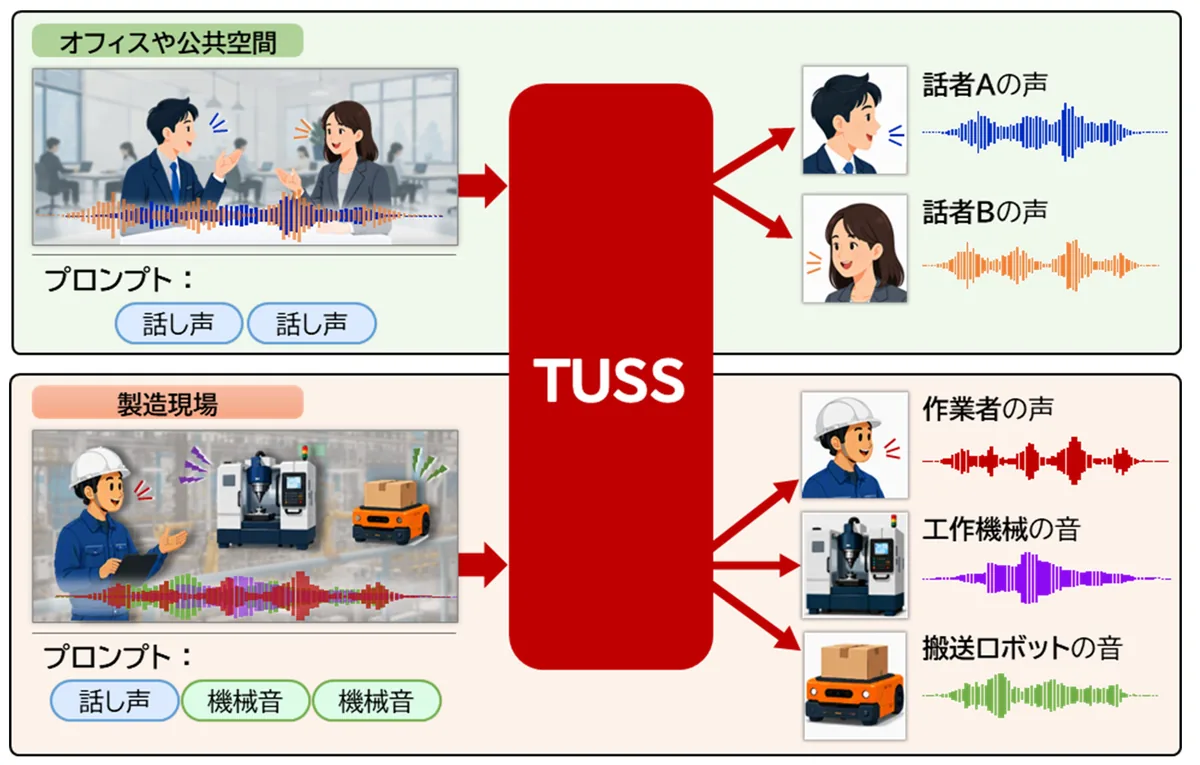
"Ear" of Physical AI: Distinguishing Diverse Sounds, from Machine Anomalies to Human Voices
In factories and public spaces, the various sounds of machinery and human voices layered over the ambient noise make it difficult for AI to accurately capture the required target sound. The TUSS technology developed by Mitsubishi Electric Group allows users to specify the type of sound they wish to extract from an audio recording combining several sources. To do this, a single AI model is employed to perform the various tasks—such as speech separation, speech enhancement, and machinery noise separation—that previously required a dedicated model for each specific application. A key feature of this technology is its flexibility: there is no need to create separate models for different situations or objectives. TUSS technology is intended for use with robots, surveillance equipment, and industrial machinery, which can benefit from its rapid processing speed and the fact that it is not dependent on multiple microphones. By adding auditory information to physical AI—which has so far focused on still and moving images—TUSS helps to improve the accuracy of anomaly detection, speech recognition, and on-site logging. As a foundational technology that makes sophisticated use of sound as data to broaden the scope of AI’s understanding of the real world, it is expected to see widespread adoption.
Minister's
Award
TDK Corporation
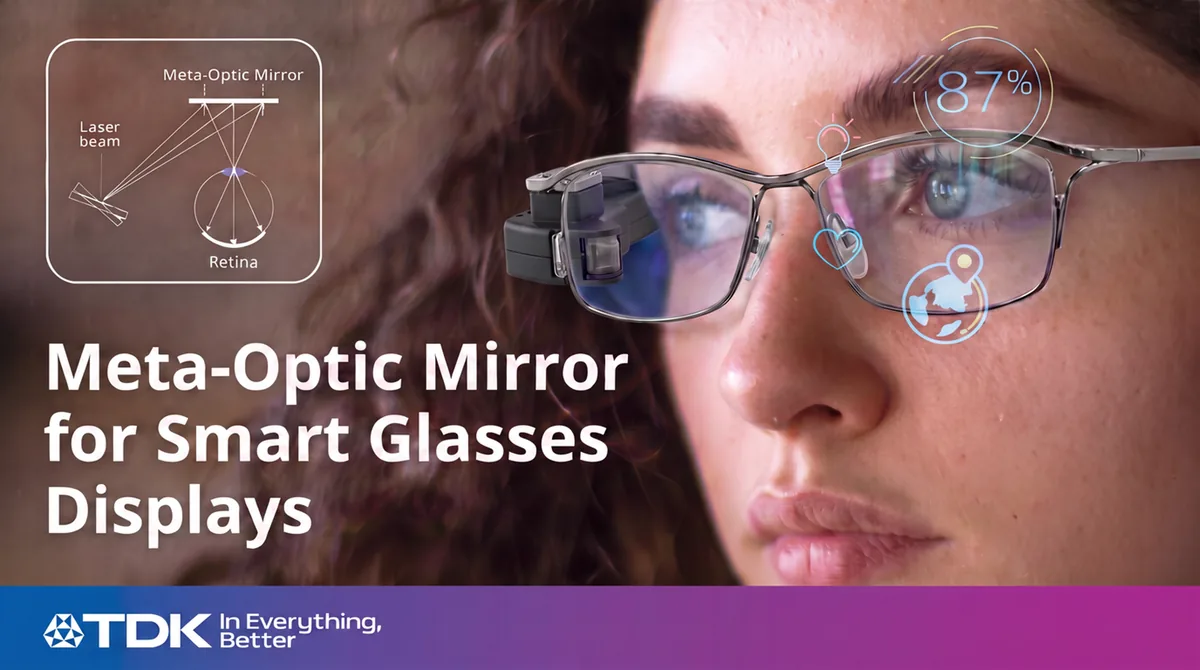
Meta-Optic Mirror for Smart Glasses Displays
Through integration with AI, smart glasses are expected to become a next-generation digital device. But in addition to display performance, they need to offer designs that are suitable for everyday wear, featuring compact, slim optical systems. All of this is key to widespread adoption. TDK has developed a meta-optic mirror that controls the direction in which light is reflected using nano-scale reflective structures. This technology has made it possible to replace the large, curved mirrors previously required for virtual retinal displays (VRDs), embedding a thinner, flatter mirror into the lens. This ensures high transparency while suppressing rainbow patterns caused by light interference, resulting in smart glasses that look similar to ordinary glasses. Thanks to utilizing a component technology based on nanostructures, this technology avoids the aesthetic limitations inherent in conventional VRD approaches, enabling a simplified optical system that is not dependent on expensive waveguides. Its further development is highly anticipated as a manufacturing technology that will advance practical smart glass applications and support the growth of a market for next-generation interfaces.
Digital Agency
Award

Hitachi, Ltd.
“HMAX™ by Hitachi: AI Solutions Driving the Realization of a Harmonized Society”
Increasingly severe issues are facing the people who support the social infrastructure; these include labor shortages, a decline in the number of skilled engineers, and aging equipment. Designed for the railway, power, industrial, and financial sectors, HMAX™ by Hitachi is a suite of AI solutions that combines AI with the OT, IT, product technologies, and domain expertise that Hitachi has cultivated over the years. Designed to enhance operations, maintenance, control, and decision-making, it not only analyzes field data but also makes use of such analyses for actual operations and control, resulting in continuous improvement. When it comes to social infrastructure, safety and reliability are essential. Hitachi is distinguished by its ability to integrate AI into actual operating equipment and systems. The company intends to expand from offering predictive maintenance and operational efficiency improvements for individual pieces of equipment to providing optimization that spans multiple pieces of equipment and operations. As an initiative that harnesses AI to enhance the safety, security, and resilience of social infrastructure, there are high expectations for the future development of HMAX™.
Award

SHARP CORPORATION
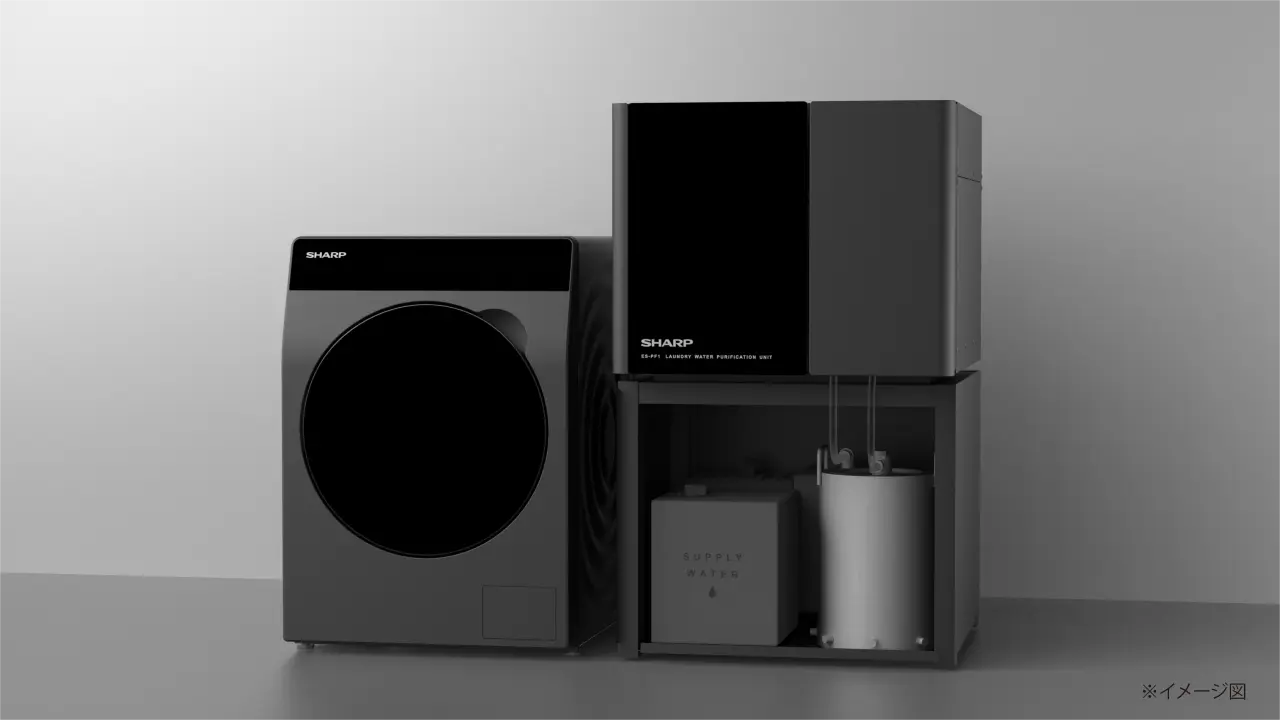
Drain-free Circulating Laundry System "Triple Free Laundry"
At evacuation shelters, interruptions to the water supply and limited drainage systems can mean it is difficult to do laundry, making it hard to maintain daily hygiene by keeping clothes clean. Sharp’s Triple Free Laundry is a recycling laundry system that employs a multi-stage process to purify and reuse wash water. Designed to be used as a standard laundry system when there is a normal water supply and drainage, in emergencies it operates in recirculating mode, allowing people to continue doing their laundry without a water supply or drainage. This system represents of a "phase-free" approach—that is, appliances for everyday life can also be used during emergencies, thus avoiding the need to store equipment exclusively for disaster relief. Since it does not rely on a fixed water supply or drainage system, Triple Free Laundry is suited not only for evacuation shelters but also for ships and remote islands with limited water resources, as well as in areas lacking a developed water infrastructure. It has been recognized for evolving home appliance technology and adding value by creating a washing machine that can be used anywhere, thereby offering a new option for maintaining a vital part of daily life even in places with water constraints.
Award
Murata Manufacturing Co., Ltd. / Melt Interface Technologies Inc.
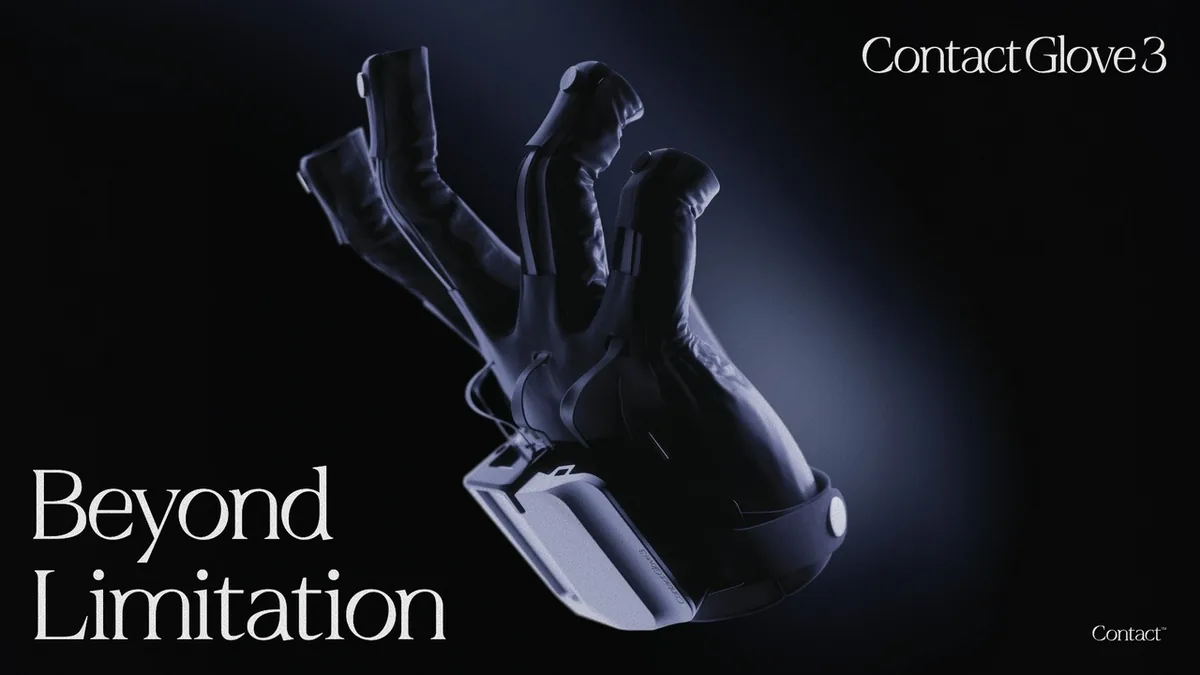
Connecting Human Motion to Physical AI — High-Precision Hand Tracking for AI and Robotics
For physical AI to support or replace human labor, high-quality data for learning real-world tasks is essential. Conventionally, however, stable capture of the delicate movements of human fingers over extended periods is difficult because cameras can be obstructed and IMUs can accumulate errors. To address this, the ContactGlove3 Pro from Murata Manufacturing and Melt Interface Technologies uses EMF to track the position and orientation of all five fingers, continuously capturing data during actual work tasks. It is not just a matter of capturing skeletal coordinates: by linking hand movements to the work context—in other words, recording what action is being performed during which process—the resulting data becomes meaningful for AI. If the hand movements of a skilled worker can be saved as high-quality data, the scope of potential applications will expand to include robot training, skills transfer, and even replicating intricate manual tasks that were previously difficult to automate. This has been recognized as a foundational technology, capturing source data needed to support the implementation of physical AI, including humanoid robots, in society.
Award
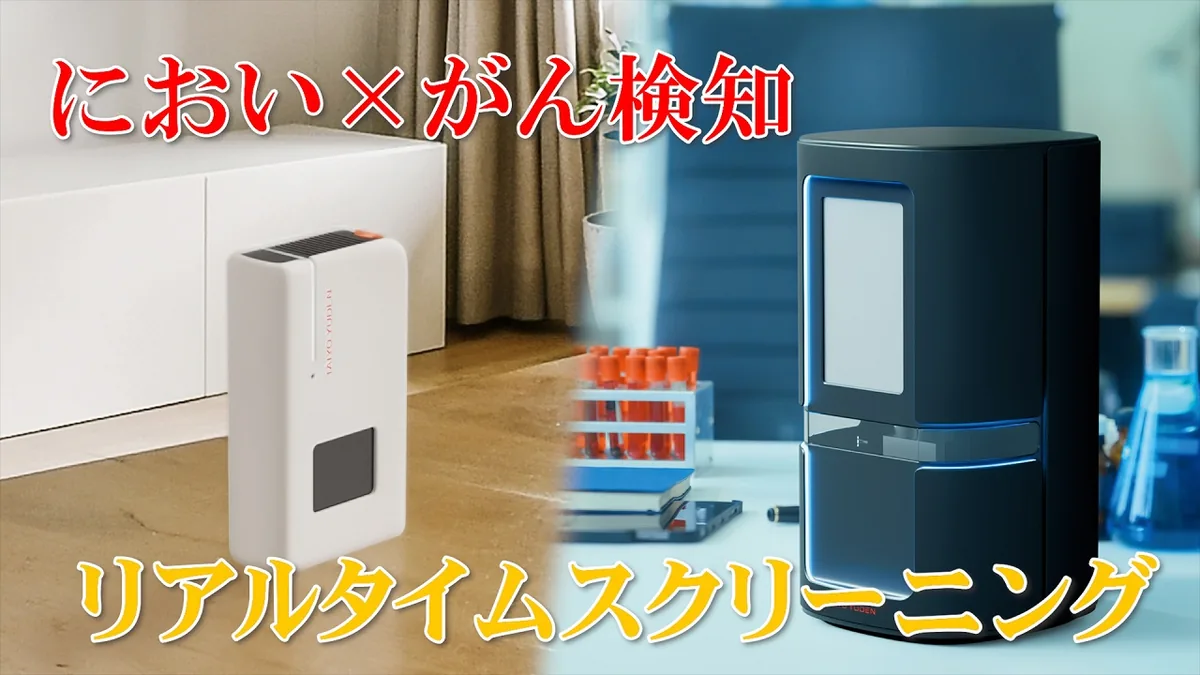
TAIYO YUDEN CO., LTD.
Early Cancer Detection with AI-powered Smell Sensors — A New Pre-Screening Approach Catching the Signs Before Symptoms Appear —
When it comes to the early detection of cancer, developing more advanced screening technologies is important, but the actual challenge is to encourage people without noticeable symptoms to undergo screening. Taiyo Yuden has developed an odor-sensing technology that uses its proprietary QCM sensor to detect reaction patterns of VOCs (volatile organic compounds) in urine for AI-based analysis. Stage Zero Screening is how the company describes this approach to detecting physiological changes without placing a burden on the body, encouraging individuals to have tests done at medical institutions if necessary. This is not intended to replace diagnosis, but to foster awareness beforehand. This replicates olfaction, one of our five senses, capturing smells as data that can be used for comparative analysis. It was made possible by applying the company’s expertise in materials, thin-film and microfabrication technologies—developed for the electronics components industry—to the health sector. By increasing opportunities in daily life for people to seek medical care, it encourages them to take the first step and get tested, something that advances in screening and diagnostic technologies alone have been unable to achieve. This initiative has been recognized for its approach to supporting early cancer detection not only through medical technology but also by motivating people to seek medical care.
Categories

Innovation Award
-
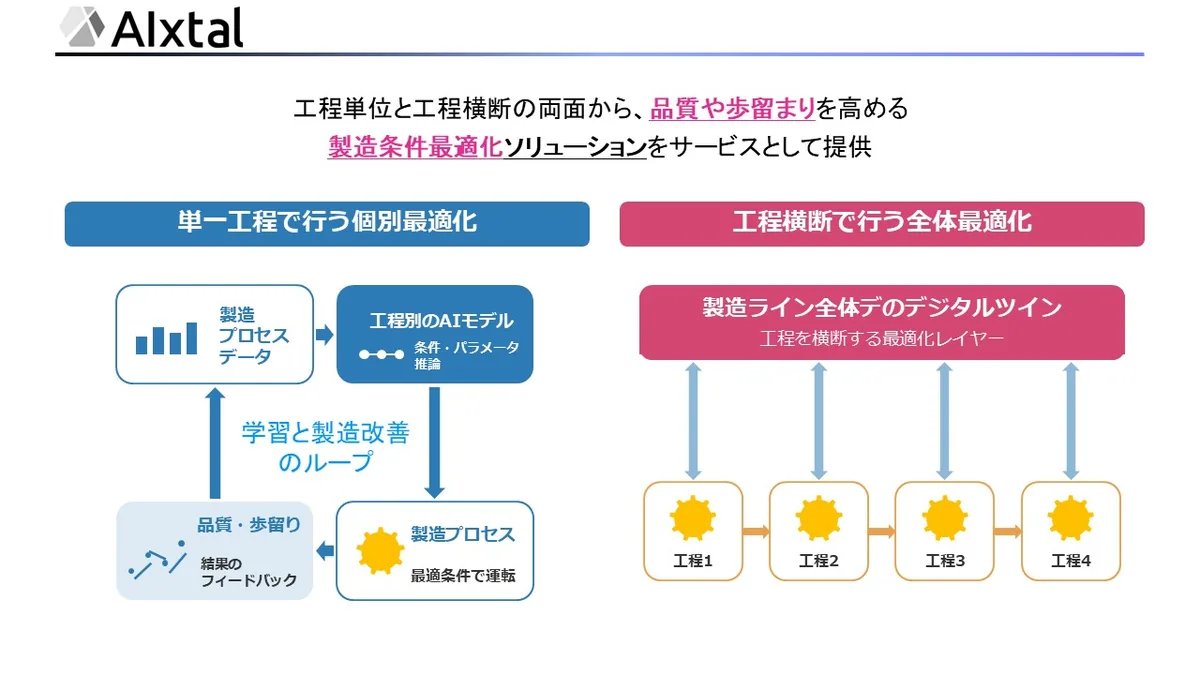
Aixtal Corporation
Next-Generation Process Optimization Platform
-
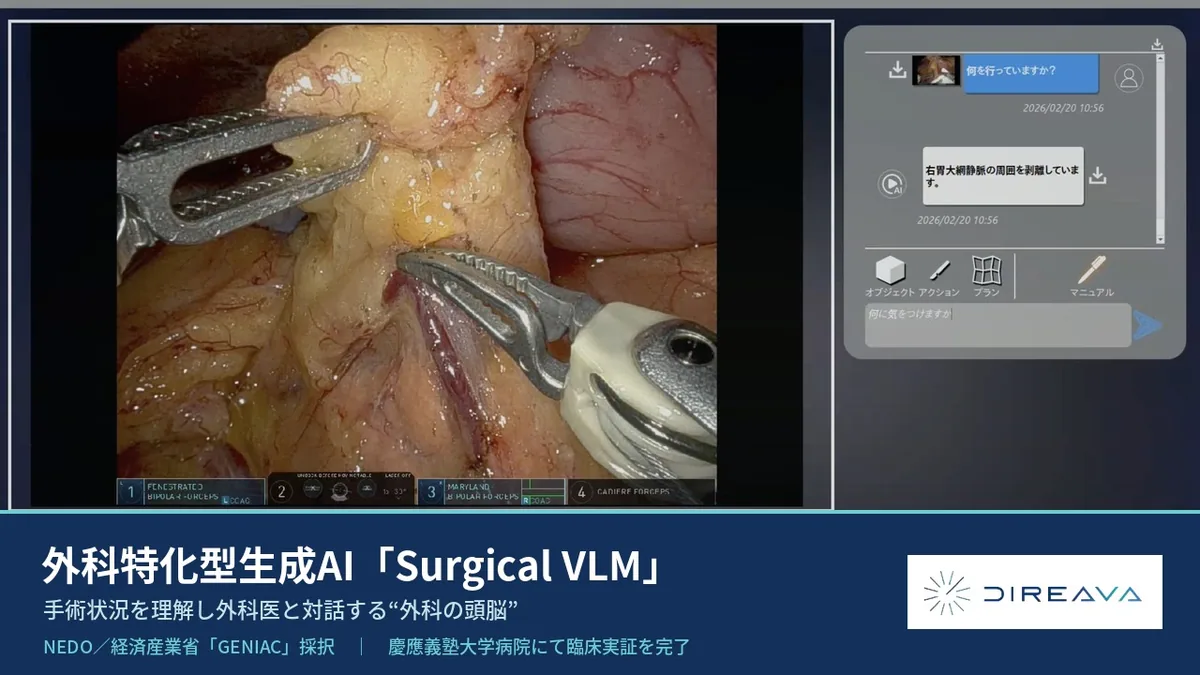
Direava Inc.
A Vision-Language Model for Surgical Intelligence: Next-Generation AI that Understands Surgical Context
Global Innovation Award
-
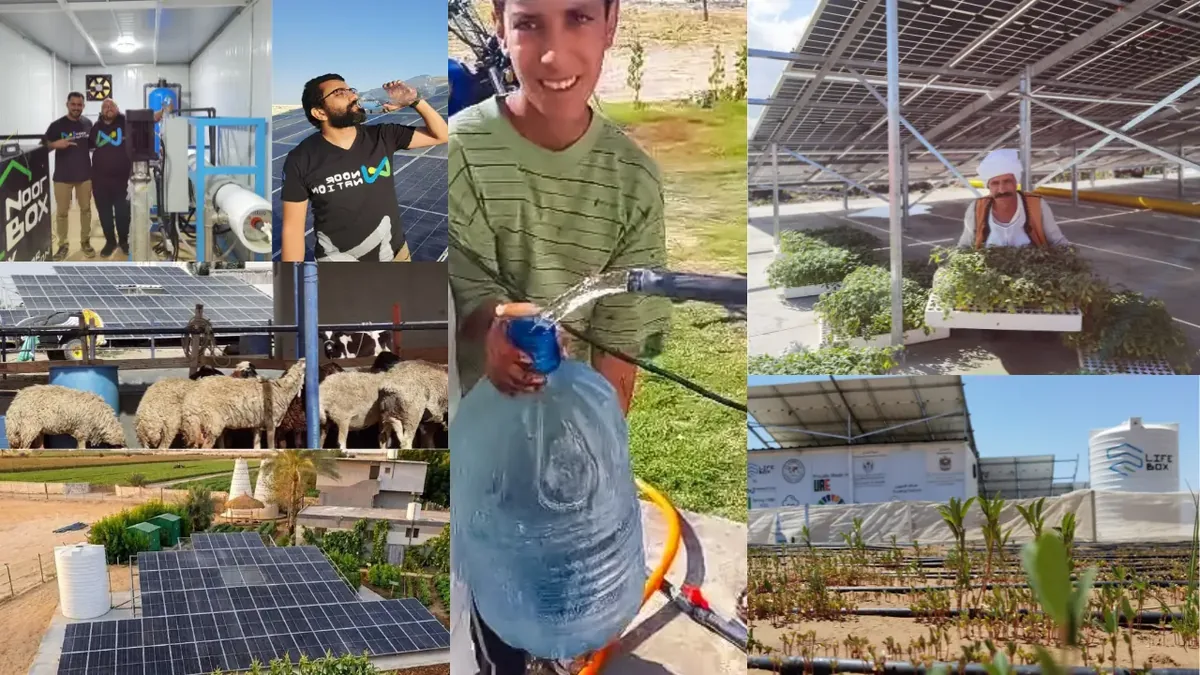
NoorNation
NoorNation for Renewable Energy
Transformation Award
-
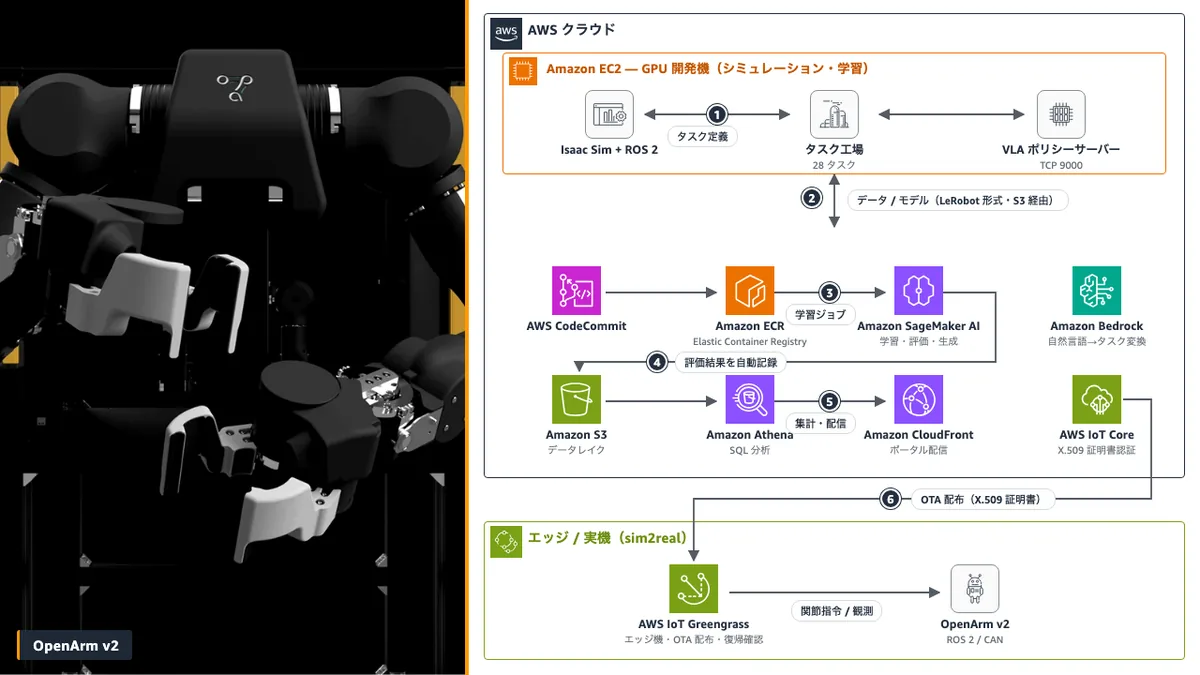
Amazon Web Services Japan G.K.
AI Agents That Build Robot Skills — An Autonomous Physical AI R&D Platform from One-Line Instructions to Real-World Deployment
Next Generation Award
-
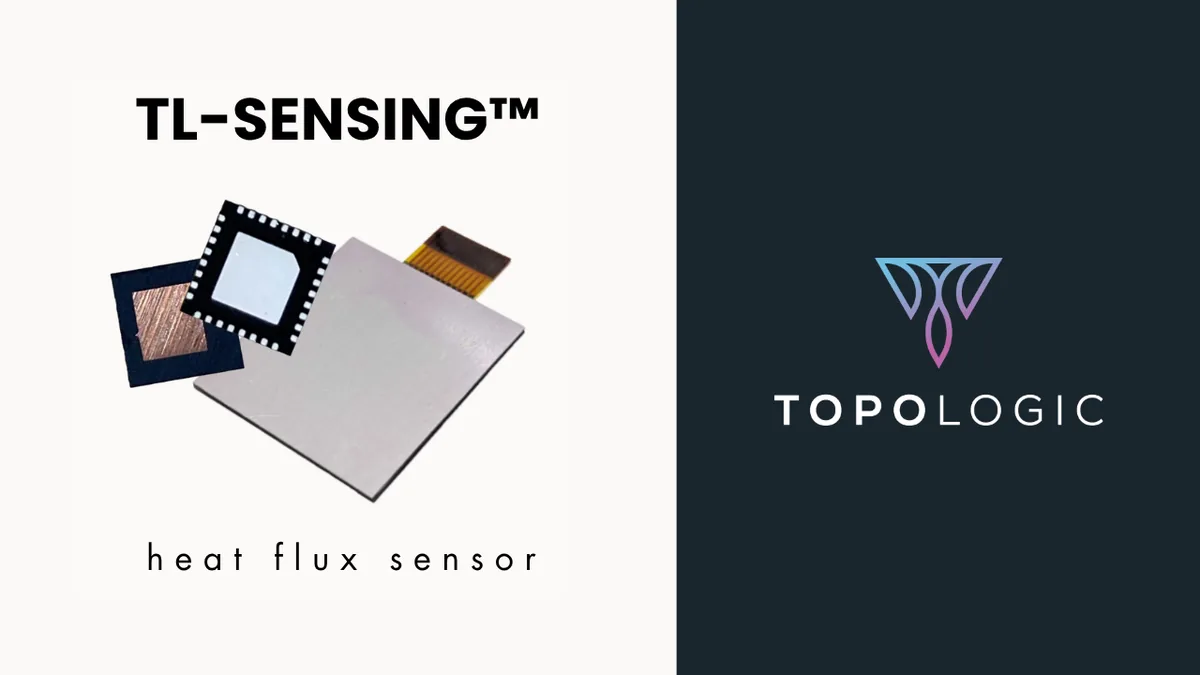
TopoLogic Inc.
Revolutionay Materials x Ultra-Fast Heat Detection = Pioneering Global Markets
-
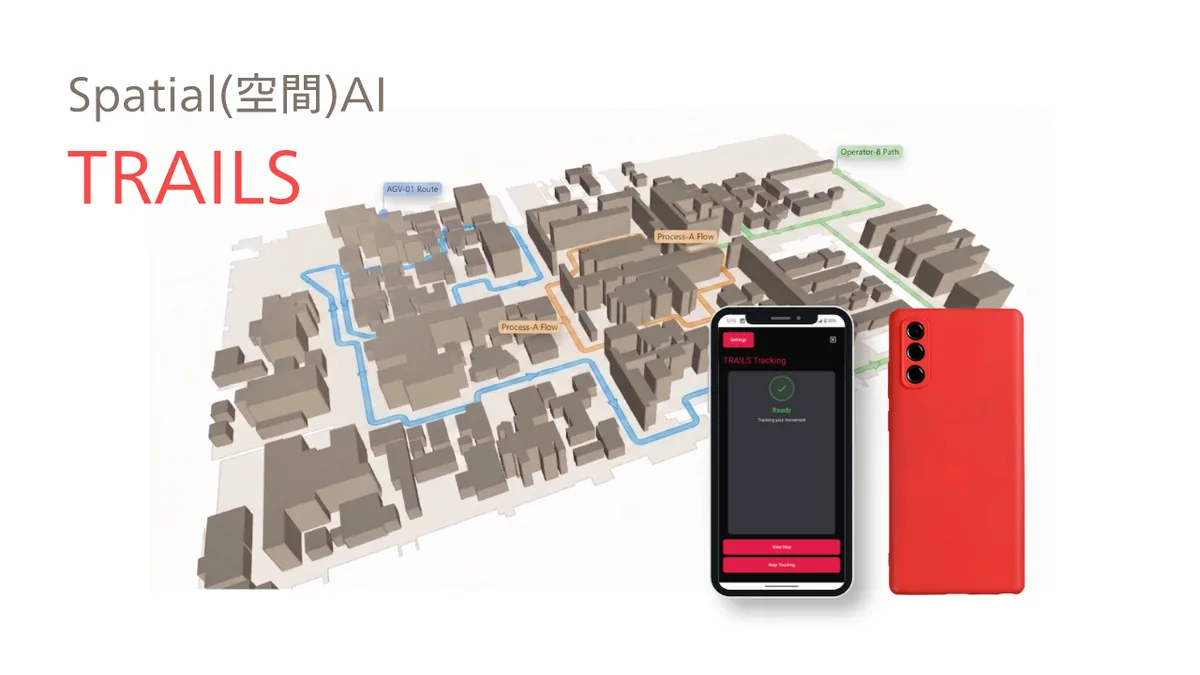
Zeteoh, Inc.
TRAILS - Smartphone-Only Spatial AI for Positioning in GPS-Denied Environments
Mobility Innovation Award
-
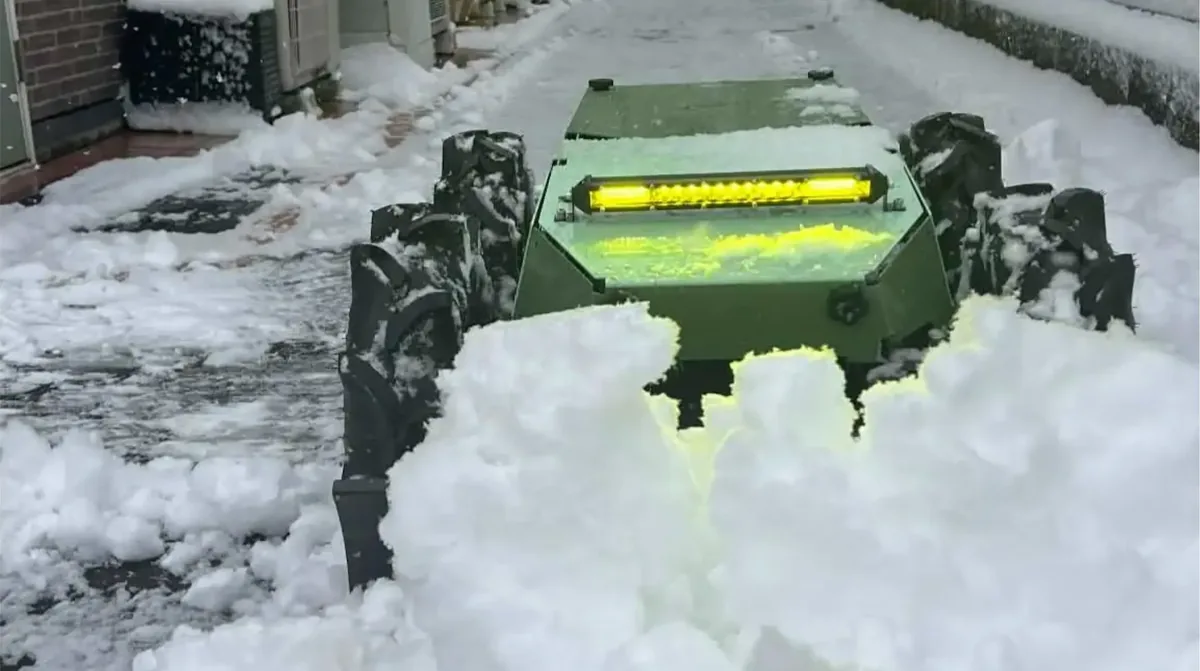
everblue Technologies INC
Snow Removal Drone®: A Japan-Made Ground Drone That Automates Dangerous, Labor-Intensive Work in Snowy Regions
